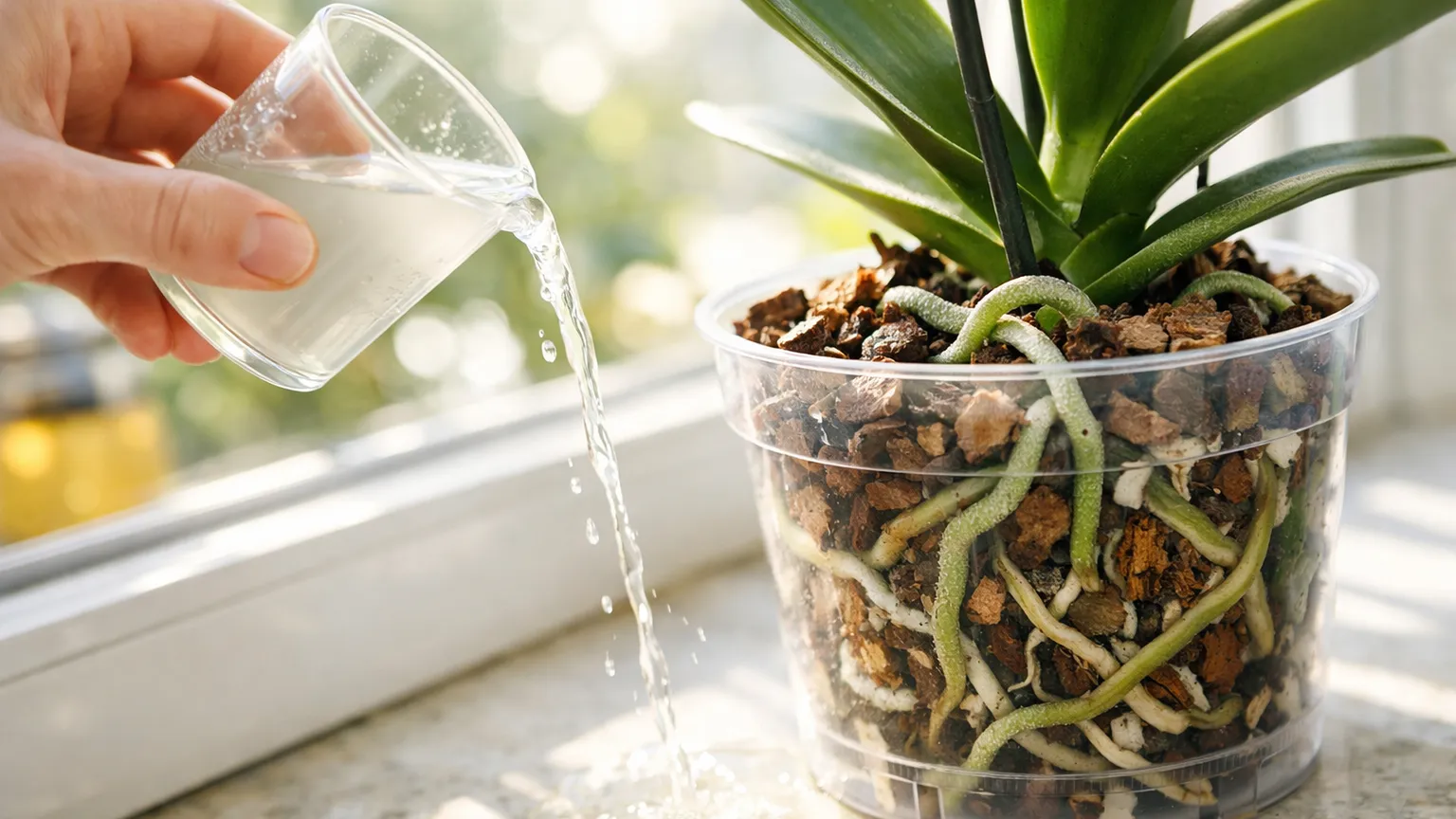
Orchids are among the most elegant and rewarding houseplants, yet they are also the most misunderstood. Across the United States, thousands of plant lovers bring home a beautiful orchid from a grocery store, garden center, or big-box retailer—only to watch it slowly lose its flowers, develop limp leaves, or stop blooming altogether.
If your once-gorgeous orchid now looks tired, droopy, or downright miserable, don’t give up just yet. There’s a simple, surprisingly powerful method known as the one-cup-a-month routine that can bring even struggling orchids back to life.
This guide will show you exactly how to use this routine, why it works, and how American home growers can revive orchids for stronger roots, greener leaves, and more blooms.
Why Orchids Struggle in American Homes
Most orchids sold in the U.S. are Phalaenopsis orchids, also called moth orchids. They’re grown in greenhouses with:
- High humidity
- Filtered light
- Perfect airflow
- Consistent watering
Once they come into our homes, conditions change drastically. Common causes of orchid decline include:
- Overwatering (the #1 killer)
- Poor drainage
- Dry indoor air from heating or air conditioning
- Low light
- Compact, old potting mix
When roots sit in water too long, they rot. When roots rot, leaves wilt. When leaves wilt, blooms drop. The plant enters survival mode.
That’s where the one-cup-a-month orchid routine becomes a game-changer.
What Is the One-Cup-a-Month Routine?
The one-cup-a-month routine is a measured deep-hydration method designed to soak orchid roots without drowning them.
Instead of frequent light watering, you give your orchid one full cup of water once a month using a specific technique that mimics how orchids receive moisture in nature.
This approach is especially useful for:
- Orchids with wrinkled leaves
- Plants that haven’t bloomed in months
- Orchids that look dry, weak, or stressed
Why One Cup Works So Well
Orchid roots are not like normal plant roots. They are covered in a spongy layer called velamen, which absorbs water quickly and stores it.
When you pour one cup of water slowly through the pot:
- The velamen absorbs moisture
- Roots hydrate deeply
- Excess water drains out
- No standing water remains
This prevents root rot while ensuring the plant gets the hydration it needs.
It’s the perfect balance between too dry and too wet—something many American orchid owners struggle with.
How to Do the One-Cup-a-Month Orchid Routine
Follow this exact method for best results.
Step 1: Use the Right Water
Orchids hate chemicals. Use:
- Rainwater
- Distilled water
- Or tap water that has sat out overnight
This allows chlorine and fluoride to evaporate.
Step 2: Choose a Morning Time
Always water orchids in the morning. This gives excess moisture time to evaporate before night, reducing fungal problems.
Step 3: Pour One Full Cup
Slowly pour one cup (8 ounces) of water over the potting mix, letting it run through the drainage holes.
Never let the orchid sit in standing water.
Step 4: Let It Drain Completely
After watering, place the pot in the sink or on a towel for 10–15 minutes so all extra water drains out.
Then return the orchid to its normal location.
Step 5: Repeat Once a Month
For struggling orchids, repeat this routine once a month while giving light misting or small sips if needed between sessions.
Signs Your Orchid Is Recovering
Within 2–4 weeks, you should notice:
- Firmer, plumper leaves
- New root tips (green or silver)
- Upright posture
- Eventually, a new flower spike
These are signs that your orchid has left survival mode and is returning to growth mode.
Where to Place Your Orchid in an American Home
Light is just as important as water. Orchids thrive in:
- Bright, indirect light
- Near an east- or north-facing window
- Behind sheer curtains
Avoid placing orchids in direct sunlight, which can burn leaves, especially in sunny U.S. climates like California, Texas, or Florida.
Humidity Boost: The Secret Multiplier
Most American homes are too dry for orchids, especially during winter.
To increase humidity:
- Place the pot on a tray of pebbles and water
- Group orchids together
- Use a small humidifier
Higher humidity allows orchids to absorb more moisture from the air, boosting the effects of the one-cup routine.
Should You Fertilize During Recovery?
Yes—but lightly.
Use a balanced orchid fertilizer (20-20-20) at ¼ strength once every 2–3 weeks. Apply it after the one-cup watering so roots don’t burn.
This gives the orchid the nutrients it needs to build new roots and leaves.
What If Your Orchid Has Root Rot?
If the orchid still looks bad after one month, inspect the roots.
Healthy roots = green or silver
Rotten roots = brown, mushy, or hollow
Trim off dead roots with sterilized scissors and repot in fresh orchid bark. Then begin the one-cup-a-month routine again.
Why This Method Is So Popular in the U.S.
American orchid growers love this technique because it:
- Prevents overwatering
- Is easy to remember
- Fits busy lifestyles
- Works for apartments, condos, and homes
- Requires no special equipment
It’s ideal for beginners and seasoned plant parents alike.
How Long Until Your Orchid Blooms Again?
Most orchids bloom once or twice a year. After recovery, it can take 2–6 months to send up a new flower spike.
But with healthy roots and proper watering, the blooms will be bigger, brighter, and longer-lasting.
Common Mistakes to Avoid
- Never use ice cubes (they shock tropical roots)
- Don’t leave water in the crown of the plant
- Avoid heavy garden soil
- Never water on a schedule—check dryness first
Final Thoughts
If your orchid looks like it’s on its last leg, don’t throw it away. The one-cup-a-month routine is a simple yet powerful way to revive orchids, restore their roots, and bring back breathtaking blooms.
With the right light, humidity, and this easy watering method, your struggling orchid can become the showpiece of your American home once again.