Flowers have long captured our imagination, not just for their beauty but for their rarity, fragrance, and sometimes astronomical value. While roses and tulips are familiar staples in gardens worldwide, some blooms are so unique, so difficult to cultivate, or so fleeting that they become the ultimate collector’s items. These rare flowers often carry fascinating histories, exotic origins, or extraordinary growing conditions that make them both captivating and expensive.
In this guide, we’ll explore 10 rare and expensive flowers that will amaze you, including what makes them special, why they are so valuable, and tips for appreciating or cultivating them.
Why Some Flowers Are Rare and Expensive
Several factors contribute to a flower’s rarity and high cost:
- Geographic Limitations: Flowers native to remote areas or specific climates are harder to cultivate elsewhere.
- Difficult Cultivation: Some species require precise humidity, temperature, or soil conditions to thrive.
- Specialized Pollination: Flowers that rely on rare insects or nocturnal pollinators are challenging to reproduce.
- Unique Appearance or Fragrance: Striking colors, patterns, or scents increase desirability.
- Cultural or Historical Significance: Flowers with symbolic or historical importance are often highly prized.
These factors combined make certain flowers true horticultural treasures.
1. Juliet Rose
- Origin: United Kingdom
- Rarity: Developed over 15 years by famed rose breeder David Austin.
- Special Feature: Stunning apricot-golden petals with a delicate, sweet fragrance.
- Value: Estimated at $5 million, due to its rarity and the painstaking breeding process.
The Juliet Rose is a prime example of human patience and artistry, combining elegance and uniqueness in one bloom.
2. Shenzhen Nongke Orchid
- Origin: China
- Rarity: Artificially created after eight years of research; does not occur in the wild.
- Special Feature: Produces large, elegant blooms with subtle fragrance.
- Value: Sold at auction for $200,000, making it one of the most expensive orchids globally.
This orchid shows how science and dedication can transform a plant into a luxury collector’s item.
3. Kadupul Flower (Epiphyllum oxypetalum)
- Origin: Sri Lanka
- Rarity: Blooms only at night and wilts before dawn.
- Special Feature: Known as the “Queen of the Night,” it emits a sweet, intoxicating fragrance during its short bloom.
- Value: Priceless in traditional terms, due to its fleeting beauty.
Kadupul flowers are ephemeral wonders, celebrated for their extraordinary and fleeting charm.
4. Gold of Kinabalu Orchid (Paphiopedilum rothschildianum)
- Origin: Mount Kinabalu, Borneo
- Rarity: Found in a limited high-altitude habitat; protected by conservation laws.
- Special Feature: Distinctive “slipper” shape with striking horizontal stripes.
- Value: Can cost up to $5,000 per plant for collectors.
This orchid is both rare and visually stunning, a trophy for serious collectors.
5. Lily of the Valley (Convallaria majalis)
- Origin: Europe and Asia
- Rarity: Difficult to cultivate commercially; delicate flowers are sensitive to handling.
- Special Feature: Tiny, bell-shaped blooms emit an enchanting fragrance.
- Value: Prices surge during peak season, especially around May Day celebrations.
This delicate flower shows that fragrance and timing can greatly increase a bloom’s value.
6. Rothschild’s Slipper Orchid
- Origin: Malaysia and Borneo
- Rarity: Limited to specific high-altitude habitats.
- Special Feature: Bold stripes and unique “slipper” pouch, making it instantly recognizable.
- Value: Can fetch thousands of dollars from orchid enthusiasts.
Collectors prize Rothschild’s Slipper for its exquisite patterns and scarcity.
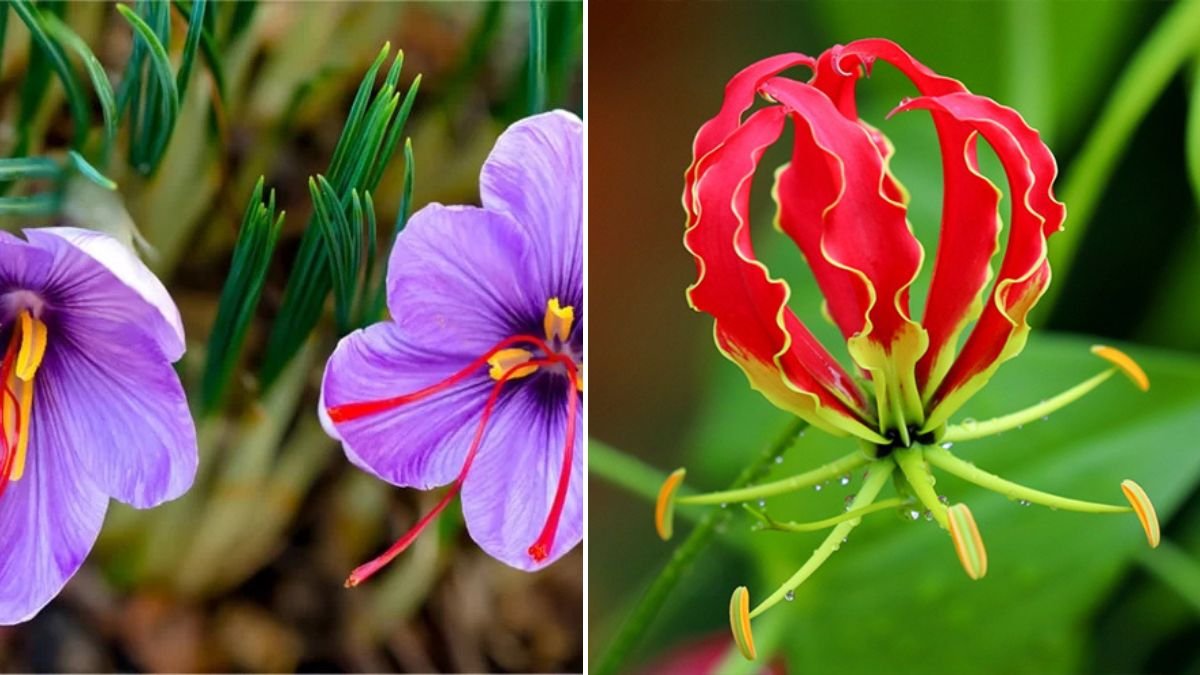
7. Gloriosa Lily (Gloriosa superba)
- Origin: Africa and Asia
- Rarity: Requires tropical conditions; challenging to cultivate outside native regions.
- Special Feature: Flame-like petals with brilliant red and yellow hues.
- Value: Its limited availability in temperate regions raises its price.
The Gloriosa Lily adds drama and exotic beauty to any floral collection.
8. Zygopetalum Orchids
- Origin: South America
- Rarity: Rare hybrids are prized among collectors for their unique scent and pattern.
- Special Feature: Fragrant flowers with spicy notes resembling chocolate or vanilla.
- Value: Can range from hundreds to thousands of dollars, depending on the cultivar.
Zygopetalums demonstrate the marriage of science and aesthetics in horticulture.
9. Saffron Crocus (Crocus sativus)
- Origin: Southwest Asia
- Rarity: Only the red stigmas are harvested; hand-picking is labor-intensive.
- Special Feature: Produces saffron, the world’s most expensive spice, rather than a typical ornamental bloom.
- Value: Up to $5,000 per pound for high-quality saffron.
This plant is a rare flower valued for both culinary and economic reasons.
10. David Austin Roses (Special Hybrids)
- Origin: United Kingdom
- Rarity: Limited production; often patented hybrids.
- Special Feature: Combines exquisite fragrance, petal structure, and delicate coloration.
- Value: Can reach hundreds to thousands of dollars depending on the variety.
David Austin’s roses exemplify how selective breeding transforms common flowers into luxury horticultural items.
Tips for Appreciating or Growing Rare Flowers
- Know Their Natural Habitat: Replicate temperature, humidity, and soil conditions.
- Provide Adequate Light: Many rare species need bright, indirect light or specific light cycles.
- Maintain Humidity: Tropical orchids and lilies thrive with misting or terrarium setups.
- Avoid Overwatering: Many rare flowers are sensitive to excess moisture.
- Use Nutrient-Rich Soil: Proper soil enhances longevity and bloom quality.
- Be Patient: Some species take years to bloom; their rarity makes every flower special.
- Source Ethically: Always acquire plants legally and sustainably to protect endangered species.
Why Collecting Rare Flowers Matters
- Biodiversity Preservation: Cultivation can help protect endangered species.
- Aesthetic and Cultural Value: Rare flowers create breathtaking displays and cultural significance.
- Investment Potential: Certain orchids, lilies, and roses can be sold for significant amounts at auctions.
Collecting or cultivating rare flowers can be both a hobby and an investment, blending beauty with responsibility.
Conclusion
Rare and expensive flowers are more than decorative plants—they are living treasures, each with unique histories, growing requirements, and visual appeal. From the fleeting Kadupul flower to the million-dollar Juliet Rose, these blooms inspire wonder, patience, and admiration.
With careful attention to light, humidity, soil, and cultivation techniques, you can either grow, collect, or simply appreciate these floral marvels. Whether for aesthetic pleasure, horticultural achievement, or investment potential, rare flowers remind us that the natural world is full of surprises and extraordinary beauty.