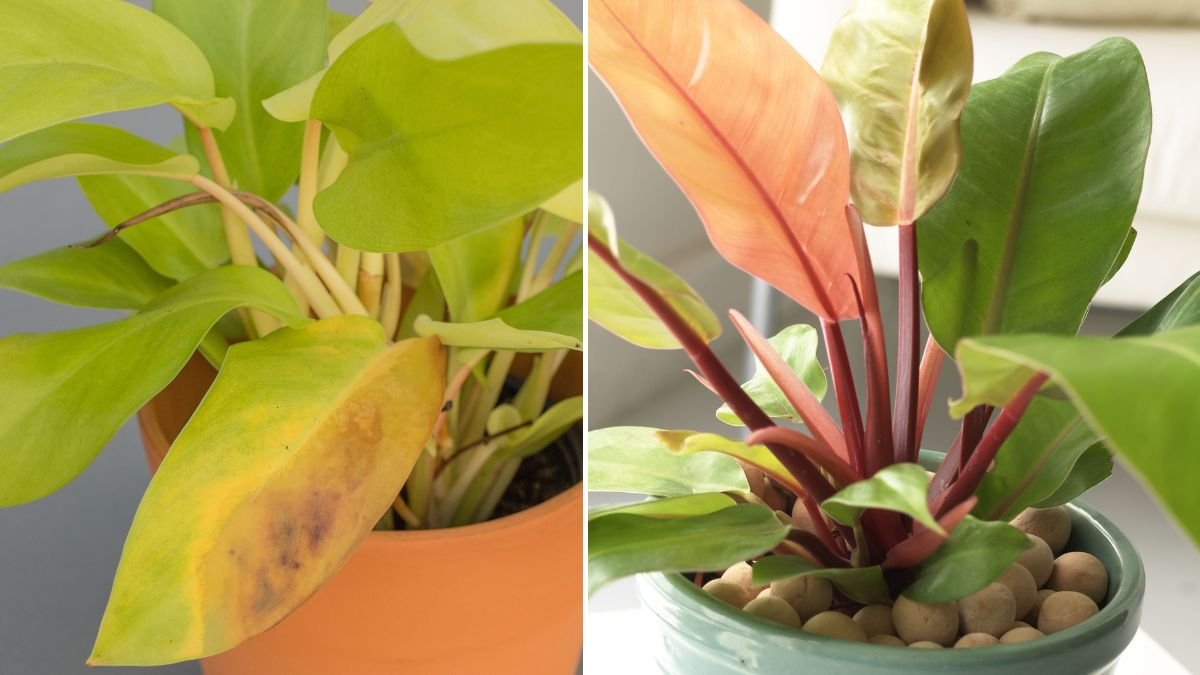
🌿 Introduction: Understanding Yellow Leaves on Your Philodendron
Philodendrons are among the most popular indoor plants due to their attractive foliage, low maintenance, and air-purifying qualities. However, seeing your philodendron leaves turning yellow can be alarming. Yellow leaves are not just a cosmetic problem—they are a warning sign that your plant is stressed or that its care routine needs adjustment.
Leaf yellowing is usually caused by one or more environmental or care-related factors, including improper watering, lighting issues, nutrient deficiencies, pests, or disease. According to plant experts, understanding why your philodendron is yellowing is the first step toward restoring it to vibrant health. (bhg.com)
In this guide, we’ll explore five key reasons philodendron leaves turn yellow and provide practical, expert-backed solutions to correct the problem.
1. Improper Watering — Too Much or Too Little
🔹 Underwatering
One of the most common causes of yellow leaves is insufficient moisture. If the top 2 inches of soil are dry, your philodendron may not be absorbing enough water to transport nutrients efficiently. This dehydration can cause the leaves to yellow and eventually droop. (aol.com)
Solution: Water your philodendron thoroughly when the top 2 inches of soil feel dry. Use your finger or a moisture meter to check soil moisture rather than relying on a fixed schedule. Regular, moderate watering keeps leaves firm and vibrant.
🔹 Overwatering
Excessive watering is another major cause of yellowing. If the roots are sitting in soggy soil, they may suffocate and rot, preventing water and nutrients from reaching the leaves. Overwatered leaves often feel soft or mushy, and the soil may emit a musty odor. (aol.com)
Solution: Ensure the pot has adequate drainage, and repot in a well-draining medium such as a mix of bark, perlite, and peat. Water only when the top portion of the soil is dry. Prune away any rotting roots to prevent further damage.
2. Light Issues — Insufficient or Excessive Sunlight
Philodendrons thrive in bright, indirect light. Both too little and too much light can cause yellow leaves.
- Insufficient light: If your plant is in deep shade, chlorophyll production slows, and older leaves may turn pale or yellow. (plantly.io)
- Excessive direct sunlight: Direct sun can scorch the leaves, leading to yellow or brown patches and crispy edges.
Solution: Position your philodendron near an east-facing or north-facing window, or provide filtered light using a sheer curtain. In dim spaces, a grow light can supplement natural light to maintain green foliage.
3. Pests — Tiny Invaders Draining Your Plant
Pests are another common cause of yellowing leaves. Mealybugs, spider mites, aphids, and scale insects suck sap from philodendron leaves, reducing nutrient availability and causing yellow patches. (aol.com)
Signs of pests include:
- Sticky residue (honeydew)
- Fine webbing (spider mites)
- Small white cottony clusters (mealybugs)
- Discolored or stippled leaf surfaces
Solution: Inspect leaves regularly, especially the undersides. Wash pests off with a gentle water spray, use neem oil, insecticidal soap, or horticultural oil, and isolate the affected plant to prevent spread. For small infestations, rubbing alcohol on a cotton swab can remove mealybugs.
4. Nutrient Deficiencies or Soil Imbalances
Yellow leaves can indicate a lack of essential nutrients. Common deficiencies include:
- Nitrogen: General yellowing across leaves
- Magnesium: Yellowing between veins on older leaves
- Iron: Yellowing on new leaves, with green veins intact (gardening.alibaba.com)
Additionally, soil can become depleted over time if the plant hasn’t been fertilized or repotted for several years.
Solution: Fertilize your philodendron during active growth months with a balanced houseplant fertilizer, diluted to half strength. Avoid overfertilization, which can burn roots and worsen yellowing.
5. Disease — Fungal or Bacterial Infections
Though less common, fungal and bacterial diseases can cause yellow leaves. Symptoms often start as small spots or patches that spread over time. Wet soil, high humidity, and poor air circulation increase susceptibility. (aol.com)
Solution: Remove infected leaves and improve airflow around the plant. Allow the soil to dry slightly between waterings and consider applying a plant-safe fungicide if the problem persists.
When Yellow Leaves Are Normal
Not all yellowing signals a problem. Older leaves naturally age and turn yellow before falling off. If new leaves are healthy and green, occasional yellow leaves may simply be part of the philodendron’s growth cycle. (aol.com)
Diagnosing Yellowing Patterns
Recognizing patterns can help identify the cause:
- Yellowing at leaf tips with dry edges: Usually underwatering or low humidity
- Soft, limp, uniformly yellow leaves: Classic overwatering or root rot
- Yellow between veins: Magnesium or iron deficiency
- Speckled yellow spots: Likely pests or fungal infection
Practical Care Tips to Prevent Yellowing
- Water smartly: Water only when the top 1–2 inches of soil are dry. Avoid standing water. (planthouseandgarden.com)
- Use well-draining soil: Mix peat, perlite, and bark to prevent root rot.
- Provide adequate light: Bright, indirect sunlight keeps leaves green.
- Fertilize appropriately: Use balanced fertilizer during spring and summer; skip in winter.
- Inspect for pests: Check leaves regularly and treat early signs of infestation.
Authoritative Sources
- Better Homes & Gardens — 5 Reasons Your Philodendron Leaves Are Turning Yellow: bhg.com
- Ideal Home — How to Grow Philodendrons: idealhome.co.uk
- Biology Insights — Why Philodendron Leaves Turn Yellow: biologyinsights.com
Conclusion
Yellow leaves on your philodendron are a common issue, but with careful observation and proper care, most causes are easily correctable. By monitoring watering, light, nutrients, pests, and disease, you can restore your plant’s health and enjoy vibrant, green foliage year-round.
Remember, yellowing is a signal — not a sentence. With the right adjustments, your philodendron can thrive and reward you with lush, elegant leaves for years to come. 🌿