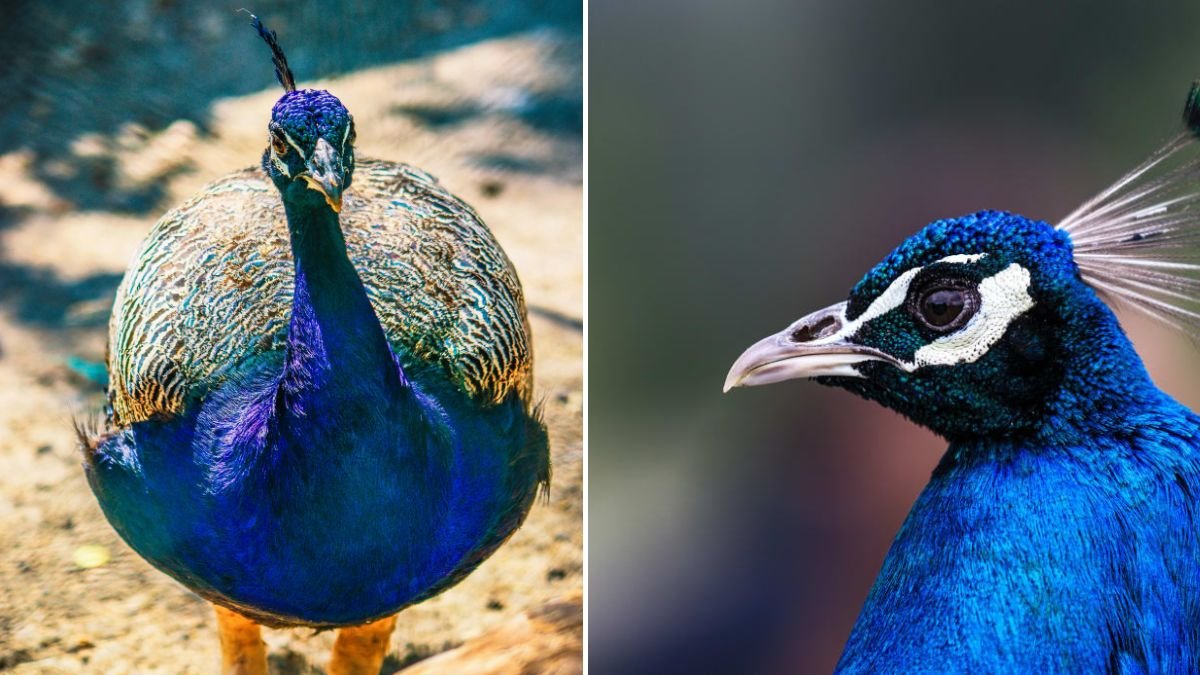
Blue is one of the rarest and most captivating colors in the natural world. While reds, browns, and greens are common because they come from readily available pigments, true blue pigments are extremely uncommon in plants and animals. As a result, many of the creatures we perceive as blue are not actually colored by blue dye-like substances at all. Instead, their bodies are built with microscopic structures that bend, scatter, and reflect light in a way that makes blue wavelengths bounce back to our eyes. This phenomenon—called structural coloration—is the secret behind much of nature’s blue magic. From rainforests to coral reefs, blue animals found in nature reveal an extraordinary blend of physics, biology, and evolutionary strategy.
One of the most famous blue animals on Earth is the blue morpho butterfly. Native to Central and South American rainforests, this butterfly flashes brilliant electric-blue wings when it flies. The color is not pigment-based; rather, each wing scale contains layered nanostructures that reflect blue light while canceling out other wavelengths. When the butterfly rests with its wings closed, the underside appears dull and brown, providing camouflage against tree bark. When it takes off, the sudden burst of blue confuses predators, giving the morpho a better chance to escape.
Birds provide some of the most familiar examples of blue animals found in nature. The blue jay, a common sight across North America, owes its bright plumage to light scattering within feather structures. Pigments in the feathers are actually brown, but the way the feather barbs are arranged causes blue light to be reflected. This blue coloration helps with communication, mate recognition, and social signaling. Similarly, the indigo bunting, a small migratory songbird, appears vividly blue in sunlight. During breeding season, males become especially bright, using their shimmering feathers to attract females and defend territory.
Parrots also contribute to the world of blue wildlife, most notably the hyacinth macaw. This magnificent bird, native to parts of Brazil, Bolivia, and Paraguay, is the largest flying parrot in the world. Its deep cobalt-blue feathers are accented by bare yellow skin around the eyes and beak, making it one of the most striking birds on the planet. Sadly, habitat loss and illegal pet trade have pushed the hyacinth macaw toward endangered status, highlighting the importance of conservation for many blue animals found in nature.
In the ocean, blue is both beautiful and practical. The blue tang, a tropical reef fish made famous by animated films, sports a bright royal-blue body with a yellow tail. In the shifting light of coral reefs, this coloration can help break up the fish’s outline, offering some protection from predators. Another stunning marine species is the mandarin dragonet. This small, bottom-dwelling fish displays intricate swirling patterns of blue, green, and orange. Unlike most blue animals, the mandarin dragonet actually produces a true blue pigment, making it an unusual exception in the natural world.
Even more surreal is the blue dragon sea slug, also known as Glaucus atlanticus. This tiny marine invertebrate floats upside down at the ocean’s surface, using air trapped in its stomach to stay buoyant. Its blue and silver coloration allows it to blend in with the water when seen from above and with the sky when viewed from below. This clever camouflage protects it from predators in the open ocean. Despite its delicate appearance, the blue dragon is capable of storing venom from the jellyfish it eats, making it surprisingly dangerous.
Amphibians bring their own vivid blues to rainforests and wetlands. The blue poison dart frog is one of the most visually striking blue animals found in nature. Its bright blue skin, often patterned with black spots, serves as a warning to predators that it is toxic. Indigenous peoples once used the frog’s poison to tip blow darts for hunting, which is how the species got its name. In the wild, these frogs obtain their toxins from their diet of ants and other small insects, making their color both a protective signal and a fascinating example of how diet and biology interact.
Reptiles also wear blue in remarkable ways. The blue iguana of the Cayman Islands is a large, herbivorous lizard with bluish-gray skin that becomes more vibrant as it matures. This color may help with temperature regulation and social communication, especially during mating season. In Australia, the eastern blue-tongued lizard displays a bright blue tongue, which it flashes when threatened. The sudden burst of color can startle predators long enough for the lizard to escape.
Not all blue animals are found on land or in shallow water. Some of the rarest are deep-sea or coastal species. Blue lobsters, for example, are not a separate species but a rare color variation caused by a genetic mutation. This mutation leads to an overproduction of a protein that binds to pigments in the shell, turning what would normally be a brownish-red lobster into a striking blue. Sightings of blue lobsters are extremely rare, making them prized by fishers and scientists alike.
Sea stars, often called starfish, can also display beautiful shades of blue. Depending on species and environment, some sea stars range from pale sky blue to deep navy. Their coloration can help them blend into rocky seabeds or coral environments, protecting them from predators. In colder coastal waters of Australia and New Zealand, the little penguin—also known as the blue penguin—has slate-blue feathers that help it blend with the ocean when viewed from above, offering camouflage from birds of prey.
So why is blue so rare in nature? The answer lies in chemistry and physics. Many natural pigments easily produce reds, yellows, and browns because those colors are chemically stable and useful for absorbing or reflecting sunlight. Blue pigments, however, are difficult for living organisms to make and maintain. Instead, evolution has favored structural coloration, where tiny physical structures interact with light. This is the same reason the sky appears blue: shorter blue wavelengths scatter more easily than longer red wavelengths. In animals, microscopic layers, ridges, or crystals in skin, scales, or feathers create similar effects, reflecting blue light back to the viewer.
The functions of blue coloration are as diverse as the species that display it. In some animals, blue acts as camouflage, blending creatures into sky or water. In others, it serves as a warning, signaling toxicity or unpalatability. For many birds and fish, blue is a powerful tool in sexual selection, helping individuals attract mates or intimidate rivals. In every case, blue is more than just a beautiful color—it is a vital part of survival and communication.
Blue animals found in nature remind us that beauty often emerges from complex and subtle processes. What looks like a simple splash of color is usually the result of intricate structures shaped by millions of years of evolution. Whether it is the shimmering wings of a butterfly, the bold feathers of a parrot, or the glowing body of a sea slug, blue continues to capture human imagination and scientific curiosity alike. By learning about these remarkable creatures, we gain a deeper appreciation for the ingenuity of nature and the fragile ecosystems that support such extraordinary diversity.