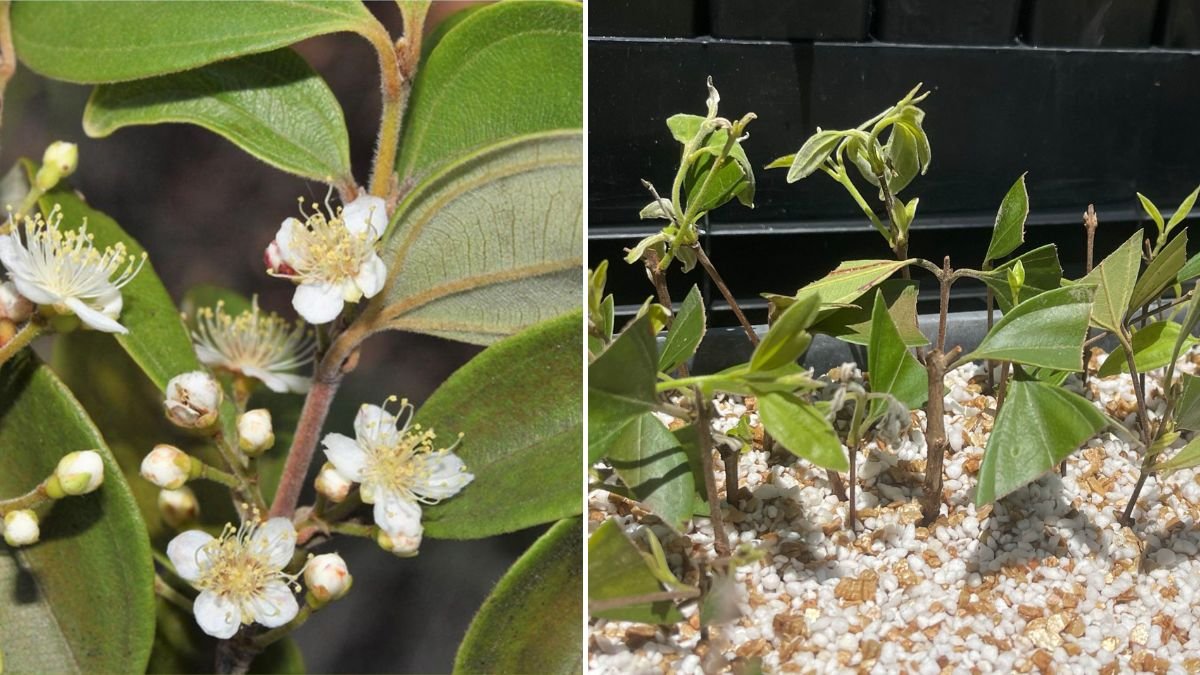
What Exactly Is the “Zombie Tree”?
The zombie tree is the common nickname for Rhodamnia zombi, a species that belongs to the myrtle family (Myrtaceae), which includes eucalyptus, guava, and many other ecologically important plants. It is native to a small area of subtropical rainforest in Queensland, Australia.
What makes this species extraordinary is how it was discovered. Scientists only recently formally described and named it—yet by the time it was recognized as its own species, it was already functionally dying in the wild. Almost every known tree had been infected by a disease so aggressive that it prevented new leaves, flowers, and seeds from forming.
In other words, the species was scientifically identified at the very moment it was on the brink of disappearing. That tragic irony is one of the reasons the story has drawn so much attention.
Why Is It Called a “Zombie”?
The zombie label comes from the way the trees behave in the forest. Infected trees do not die immediately. Instead, they linger in a half-alive state. They keep their trunks and branches, but their new growth is repeatedly killed off by disease. Young shoots shrivel, flowers fail to appear, and no seeds are produced.
This means the trees cannot reproduce. No seedlings are growing to replace aging individuals. The population becomes locked in place, slowly shrinking as old trees die one by one. From a biological standpoint, that is a living death—hence the nickname “zombie tree.”
The Fungal Killer: Myrtle Rust
The villain in this story is a fungal pathogen called myrtle rust (Austropuccinia psidii). This invasive disease attacks plants in the myrtle family and has spread through Australia since it was first detected in 2010.
Myrtle rust produces bright yellow spores that spread easily through wind, rain, insects, and even human movement. Once it infects a plant, it attacks new growth: tender leaves, buds, flowers, and shoots. For many species, repeated infections weaken the plant, deform it, and eventually kill it.
For Rhodamnia zombi, myrtle rust has been catastrophic. Every attempt the tree makes to grow new tissue is cut down by the fungus. Over time, the plant becomes exhausted and sterile. It remains standing, but it is no longer a functioning part of the ecosystem.
Why This Tree Matters
It might be tempting to ask: why put so much effort into saving one little-known rainforest tree?
The answer lies in how ecosystems work. Rainforests are complex webs of life. Every tree species provides food, shelter, and habitat for insects, birds, fungi, and microorganisms. When one species disappears, others are affected, sometimes in ways scientists do not fully understand until it is too late.
In addition, every plant species holds unique genetic information. That genetic diversity is what allows ecosystems to adapt to changing conditions—such as climate change, new diseases, and extreme weather. Losing species like the zombie tree weakens the resilience of the entire forest.
There is also a moral dimension. Human activity helped spread myrtle rust across continents. Many scientists believe we have a responsibility to try to undo at least some of the damage.
The Desperate Rescue Effort
Saving the zombie tree is not as simple as spraying fungicide in the forest. Myrtle rust is widespread and nearly impossible to eradicate in the wild. Instead, scientists are turning to a more controlled and careful approach.
The first step is finding clean plant material. Researchers search the remaining wild trees for small shoots that are not yet infected. These are carefully cut and taken to quarantine facilities, where they are grown in sterile, controlled conditions.
From these cuttings, scientists propagate new plants—essentially cloning healthy versions of the zombie tree. These young trees are raised in nurseries that are kept free of myrtle rust. Some are grown in special research facilities, while others are sent to botanic gardens that can provide long-term care.
This is called ex-situ conservation: protecting a species outside its natural habitat until it is safe to return.
Breeding for Resistance
One of the most hopeful aspects of the project is the search for natural resistance. Not every zombie tree is equally affected by myrtle rust. Some individuals show fewer symptoms or survive longer than others.
By growing many propagated trees in controlled environments, scientists can observe which ones cope best with the disease. Over time, they hope to identify genetic traits that make some trees more resistant.
If those traits can be passed on through careful breeding, future generations of Rhodamnia zombi might be strong enough to survive in the wild again.
Reintroducing the Zombie Tree to the Wild
The ultimate goal is not to keep the zombie tree locked in greenhouses forever. Scientists want to reintroduce it into its natural rainforest habitat.
This is a delicate process. Young trees must be planted in areas where the risk of infection is lower, or where environmental conditions help limit the spread of myrtle rust. Researchers will closely monitor these reintroduced trees, watching to see how they cope.
If even a small number of resistant individuals can establish themselves and begin producing seeds, the species could slowly rebuild its wild population.
A Bigger Conservation Crisis
The zombie tree is not alone. Myrtle rust threatens many members of the myrtle family in Australia and beyond. Some scientists warn that dozens of species could face extinction if resistant strains are not found.
Around the world, forests are increasingly under attack from invasive pests and diseases, often spread through global trade and climate change. From ash trees in Europe and North America to kauri trees in New Zealand, plant pathogens are reshaping entire landscapes.
The fight to save Rhodamnia zombi is part of a much larger battle to protect global plant diversity.
What This Means for the Future
The story of the zombie tree is both tragic and hopeful. It shows how quickly a species can be pushed to the edge by a single disease. But it also shows what science and dedication can achieve.
Through careful propagation, genetic research, and long-term conservation planning, scientists are giving a tree that was almost lost a second chance at life.
If they succeed, the zombie tree may one day no longer deserve its eerie nickname. Instead of standing as a symbol of extinction, it could become a symbol of resilience—a reminder that even in the face of devastating loss, nature can recover when given the right support.