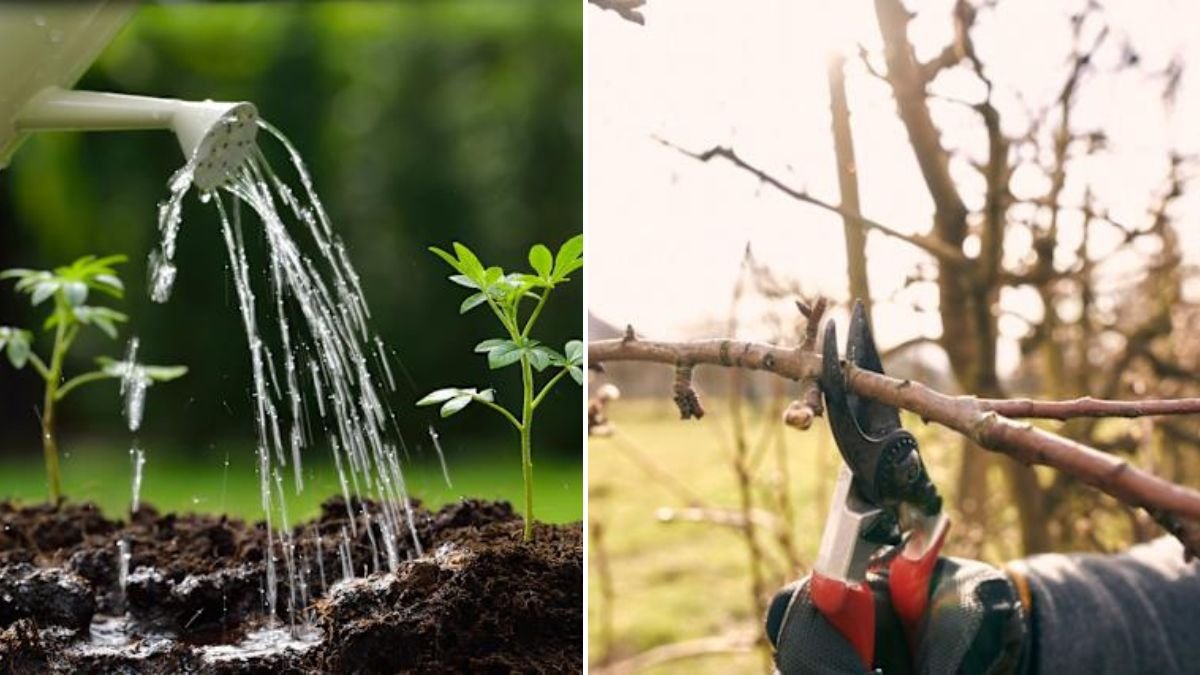
1. Prune Deciduous Trees and Shrubs
One of the most effective winter chores is pruning deciduous trees and shrubs. When leaves are gone, the structure of the plant is fully visible, making it easier to identify dead, damaged, or diseased branches. Removing these stems improves airflow, reduces disease risk, and encourages strong growth once the growing season resumes.
Tips for successful pruning:
- Focus on branches that cross, rub, or grow inward.
- Avoid heavy pruning on spring-flowering shrubs, which may reduce blooms.
- Use clean, sharp pruning shears to minimize damage and prevent disease.
- Always prune with the plant’s natural shape in mind.
Pruning in winter can seem counterintuitive, but it improves the plant’s health and increases the potential for vibrant flowers or lush foliage when spring arrives.
2. Water Trees and Evergreens During Dry Spells
Even during dormancy, many plants, particularly evergreens and recently planted trees, still require water. Extended dry periods, especially when there’s little snow or rainfall, can stress plants that rely on stored moisture. A deep, slow watering during winter ensures roots remain hydrated and ready to support spring growth.
How to water effectively in winter:
- Only water when temperatures are above freezing, typically above 4°C (40°F).
- Check that the soil isn’t frozen before watering.
- Focus on young trees and newly planted shrubs, which are most vulnerable to winter dryness.
This simple chore helps prevent winter stress and supports root health, giving plants a head start when temperatures rise.
3. Mulch Garden Beds
Applying or refreshing mulch is another high-impact winter chore. Mulch insulates plant roots, reduces soil temperature fluctuations, prevents erosion, and helps control weeds. Even when growth has slowed, mulching protects perennials, shrubs, and vulnerable plants from frost and wind damage.
Mulching tips:
- Use organic mulch such as shredded leaves, straw, or bark chips.
- Apply a 5–7 cm (2–3 in) layer, but keep it slightly away from plant bases to prevent rot.
- Focus on areas around trees, perennials, and exposed soil.
Mulching during winter is like giving your garden a protective blanket, which helps maintain soil health and preserves moisture for the upcoming growing season.
4. Clean, Service, and Store Tools
Winter is the perfect time to give your garden tools some attention. Servicing tools now extends their lifespan, ensures they are ready for spring, and prevents the spread of disease.
Tool maintenance tasks:
- Wash soil and plant debris from all tools.
- Sharpen blades on shears, pruners, and loppers.
- Oil metal components to prevent rust.
- Drain hoses and store irrigation lines to prevent frost damage.
Taking care of your tools in winter saves time and effort later, allowing you to work efficiently and safely when the busy growing season begins.
5. Plan and Order Supplies for Spring
Winter is a great opportunity to plan your garden for the coming season. Taking time to organize, order supplies, and map out garden layouts reduces stress in spring and ensures you have everything you need.
Planning suggestions:
- Review successes and challenges from the previous season.
- Order seeds, bulbs, and plants before they sell out.
- Plan new beds or rotations for flowers and vegetables.
- Make a list of soil amendments, fertilizers, and other materials.
Thoughtful planning allows you to hit the ground running when spring arrives, making gardening more enjoyable and productive.
Bonus Winter Chores Worth Considering
While the five chores above are particularly impactful, a few additional tasks can further strengthen your garden over winter:
- Add extra mulch or leaf layers: Layering additional mulch protects soil and roots in extreme climates.
- Protect tender plants: Wrap sensitive shrubs and container plants with fleece or burlap to shield them from frost.
- Inspect and repair supports: Trellises, fences, and stakes should be checked and repaired while plants are dormant to prevent midseason issues.
- Support wildlife: Leave seed heads or leaf litter to provide shelter, and maintain bird feeders or water sources (if not frozen).
These extra tasks complement the main winter chores and improve both plant health and garden aesthetics.
Why Winter Chores Matter
It’s easy to assume that gardening is only necessary during active growth periods. However, winter work has long-term benefits:
- Protects roots and plants from frost damage.
- Reduces weed pressure by controlling soil exposure.
- Maintains healthy, clean tools.
- Sets the stage for early spring growth.
Gardens that receive thoughtful attention in winter are more resilient and productive once warmer weather returns.
Suggested Authoritative Sources
For further reading and verified guidance, these resources offer expert advice on winter garden care:
- Gardening Know How – Preparing Your Garden for Winter (gardeningknowhow.com)
- The Old Farmer’s Almanac – Winter Garden Prep (almanac.com)
- National Trust – Winter Gardening Tips (nationaltrust.org.uk)
- DenGarden – Winter Garden Tasks (dengarden.com)
Final Thoughts
Even when your garden looks quiet and dormant, winter is far from a time of inactivity. These [FOCUS KEYWORD] chores — pruning, watering, mulching, tool maintenance, and planning — help your plants survive the cold months and thrive when spring arrives. By dedicating a little time to these tasks, you protect your garden from damage, maintain plant health, and set yourself up for a vibrant, productive growing season.
Winter is the season of preparation. Use it wisely, and your garden will reward you with beauty and abundance when growth returns.