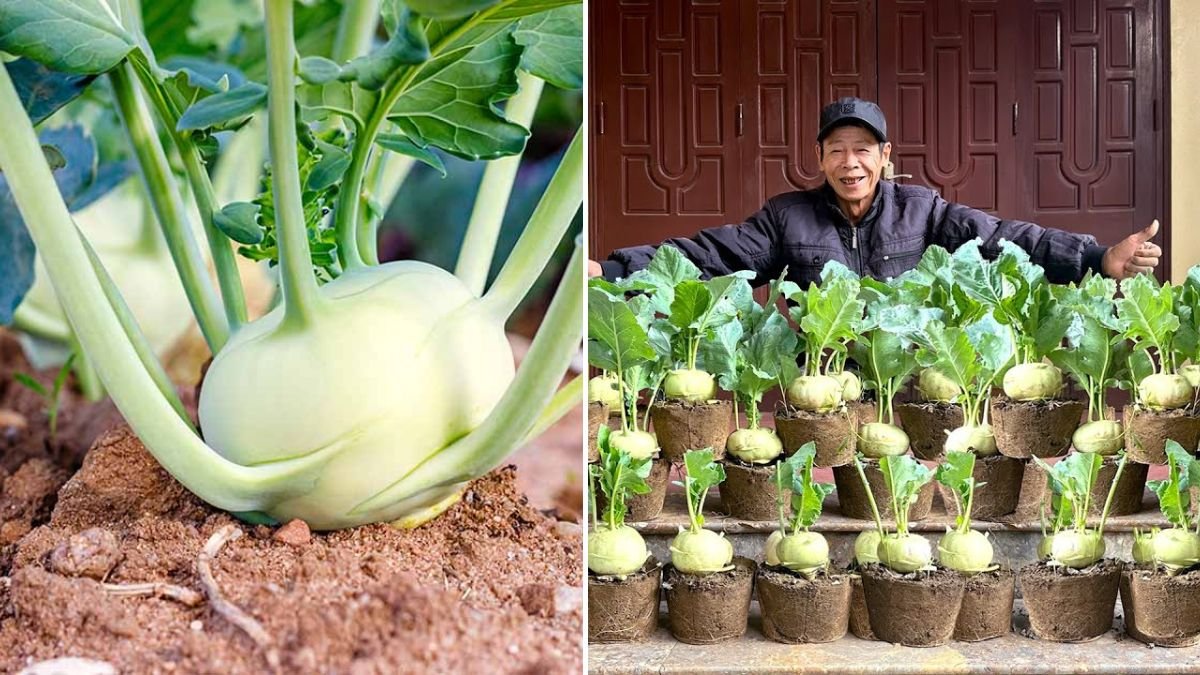
🌿 Introduction: Transform Your Garden with Kohlrabi Success
Kohlrabi (Brassica oleracea var. gongylodes) is a cool-season brassica that produces a unique, globe-shaped stem just above the soil. Its crisp texture and mild, slightly sweet flavor make it a versatile addition to salads, slaws, stir-fries, and soups. Although sometimes overlooked in modern gardens, recent trends highlight kohlrabi as a fast-growing, highly productive, and beginner-friendly crop.
A recent gardening guide titled “Revealing Secrets to Growing Kohlrabi at Home with Unprecedented Efficiency!” demonstrates practical methods to maximize yield, minimize growth time, and grow consistently healthy plants. With these techniques, even small-space gardeners can enjoy a bountiful kohlrabi harvest in as little as 45–60 days. (YouTube)
Whether you’re a beginner or an experienced gardener, this comprehensive guide will walk you through variety selection, planting, soil preparation, care, pest control, and harvesting to ensure success.
🌱 Why Grow Kohlrabi?
Kohlrabi has several advantages that make it a top choice for home gardeners:
- Fast Maturation: Most varieties mature in 45–60 days, allowing multiple crops per season. (Grow Organic)
- Cold Tolerant: Performs well in both spring and fall, making it ideal for cool-season growing. (Almanac)
- Nutritional Value: Rich in vitamin C, fiber, and antioxidants, with edible leaves similar to kale or collard greens. (Extension UMN)
- Space-Efficient: Can grow in raised beds, containers, or small plots, suitable for urban gardening.
Its distinctive bulb and large leaves also make kohlrabi visually appealing, adding diversity and interest to your vegetable garden.
🌾 Latest Insights & Home-Garden Trends
Gardening enthusiasts have been sharing efficiency-boosting techniques for kohlrabi that allow higher yields in less time. Recent online guides and videos emphasize methods such as:
- Optimal spacing: Thinning seedlings ensures bulbs have enough room to expand.
- Consistent watering: Prevents splitting and promotes tender bulbs.
- Soil enrichment: Using compost and organic fertilizers maximizes growth.
Hydroponic growers have also experimented with kohlrabi, demonstrating that its bulbous stem can thrive in soilless setups, making it a viable option for indoor and balcony gardens. (Reddit Hydroponics)
Even though kohlrabi rarely makes headlines, these modern cultivation strategies highlight its efficiency, versatility, and adaptability.
🌼 Step 1: Choose the Best Varieties
Selecting the right cultivar is crucial for maximizing yield and efficiency. Popular home-garden varieties include:
- Early White Vienna: Classic green variety, tender flesh, ready in ~55 days. (Gardeners Path)
- Kolibri: Purple-hybrid, compact, excellent for containers, and crisp in flavor. (Gardeners Path)
- Gigante: Larger variety for full-sized beds, produces bulbs up to 4–5 inches. (Gardeners Path)
Choosing early-maturing and compact varieties allows more frequent harvests and better space utilization.
🌱 Step 2: Timing Matters
Kohlrabi is a cool-season vegetable, thriving in temperatures of 65–75°F (18–24°C):
- Spring planting: Sow seeds 2–4 weeks before the last frost.
- Fall planting: Direct sow or transplant 8–10 weeks before the first expected frost.
Staggered planting every 2–3 weeks ensures a continuous supply of fresh kohlrabi throughout the season. (Almanac)
🌾 Step 3: Soil Preparation & Planting
Kohlrabi grows best in well-draining, fertile soil with pH 6.0–7.0:
- Amend soil: Mix in compost or aged organic matter to provide nutrients.
- Sow seeds: Plant ¼–½ inch deep. (Almanac)
- Spacing: Thin seedlings to 6–8 inches apart to allow bulbs to expand. (Yard & Garden ISU)
- Container planting: Use pots at least 12 inches wide for proper bulb development. (Yates Australia)
Proper spacing and soil enrichment are essential for bulb quality and size.
💧 Step 4: Watering & Fertilization
Consistent watering is key to preventing woody or split bulbs:
- Water deeply and regularly, keeping soil evenly moist. (Grow Organic)
- Mulch around plants to conserve moisture and reduce weeds. (RHS)
- Side-dress with nitrogen-based fertilizer 3–4 weeks after thinning to encourage rapid growth. (Extension Utah State)
Avoid over-fertilizing early, as excess nitrogen promotes leafy growth at the expense of bulb formation.
🐞 Step 5: Pest & Weed Management
Kohlrabi may attract flea beetles, cabbage worms, and aphids. Effective organic strategies include:
- Row covers to protect seedlings. (RHS)
- Companion planting with herbs like dill or nasturtiums to deter pests. (Grow Organic)
- Hand weeding or mulching to manage weeds. (RHS)
Prompt attention to pests ensures healthy, high-yield crops.
🌿 Step 6: Harvesting Kohlrabi
Kohlrabi bulbs are best harvested at 2–3 inches in diameter. Larger bulbs may become tough and fibrous. (Extension UMN)
- Pull the entire plant, trim roots and leaves. (Yard & Garden ISU)
- Store bulbs in the refrigerator for up to 3 weeks.
- Edible leaves can be cooked like kale or spinach for added nutrition.
Proper timing ensures maximum flavor, tenderness, and storage life.
🌱 Kohlrabi in Modern Gardens
Besides traditional soil planting, kohlrabi adapts well to container gardens and hydroponics. Its compact bulb allows efficient use of limited space, making it suitable for urban or indoor gardening setups. Home hydroponic enthusiasts have reported excellent growth and yields using nutrient-rich water solutions, further demonstrating the crop’s versatility. (Reddit Hydroponics)
📚 Recommended Authoritative Sources
- Iowa State Extension – Growing Kohlrabi in the Home Garden (Yard & Garden ISU)
- Royal Horticultural Society – Kohlrabi Guide (RHS)
- The Old Farmer’s Almanac – Planting Kohlrabi (Almanac)
- Minnesota Extension – Kohlrabi Growing Advice (Extension UMN)
🌟 Conclusion
Kohlrabi is a fast-growing, cold-tolerant, and highly productive vegetable ideal for home gardens. By following these efficiency-focused techniques — choosing the right variety, proper planting and spacing, consistent watering, fertilization, pest control, and timely harvest — gardeners can maximize yield and enjoy crisp, flavorful kohlrabi in just 45–60 days.
Whether grown in backyard beds, containers, or hydroponic setups, kohlrabi proves to be a versatile, space-efficient, and rewarding crop. By implementing these modern home-growing strategies, you can elevate your vegetable garden with bountiful, healthy, and delicious kohlrabi all season long.