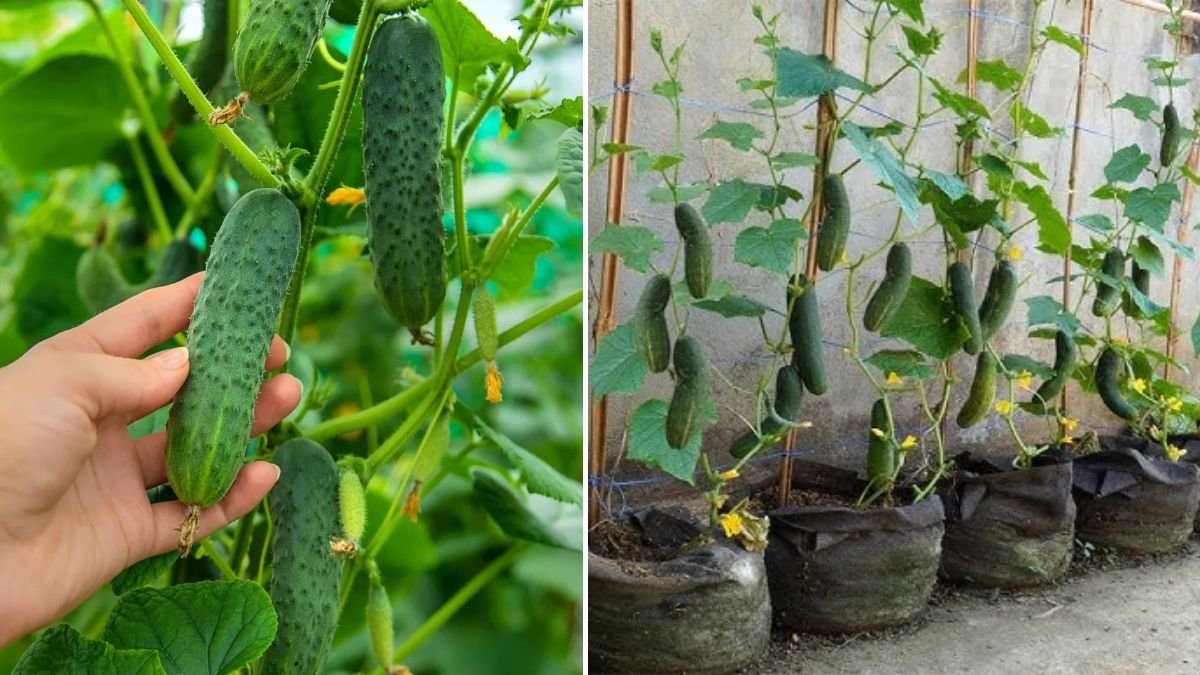
Why Cucumbers Fail for So Many Gardeners
Cucumbers are vigorous plants, but they have very specific needs. They require warm soil, steady moisture, good airflow, and plenty of pollination. When any of these are missing, the plant may still grow but produce few fruits or become weak and diseased.
Common cucumber problems include:
- Powdery mildew and leaf diseases
- Poor pollination and deformed fruits
- Bitter cucumbers caused by stress
- Rotting fruit from touching the soil
- Low yields due to overcrowding
Fortunately, all of these issues can be fixed using simple techniques that cost nothing.
1. Train Cucumbers to Grow Vertically
One of the most powerful free tricks is growing cucumbers upward instead of letting them sprawl across the ground. Vertical growing dramatically improves air circulation, reduces fungal disease, and keeps fruits clean.
You don’t need a store-bought trellis. You can use:
- Old wire fencing
- Bamboo sticks
- Tree branches
- Rope tied between poles
When cucumbers grow vertically, sunlight reaches all leaves evenly, and pollinators can find the flowers more easily. You also save space and get straighter, cleaner cucumbers.
2. Mulch Using Garden Waste
Cucumbers love moist soil. If the soil dries out, the fruit turns bitter. Instead of buying mulch, use what nature gives you:
- Dry leaves
- Grass clippings
- Straw
- Weeds without seeds
Spread a thick layer around the base of the plants. Mulch keeps moisture in, prevents weeds, and protects roots from extreme heat. This simple trick alone can double cucumber production.
3. Water the Soil, Not the Leaves
Many gardeners unknowingly invite disease by watering cucumber leaves. Wet leaves encourage fungal infections.
Always water at the base of the plant early in the morning. This keeps foliage dry and allows excess moisture to evaporate during the day. Your plants stay healthier, and fruit production increases.
4. Encourage Pollinators for More Fruits
Every cucumber starts as a flower, and most cucumbers require pollination. Without bees and insects, you’ll get flowers but no cucumbers.
To attract pollinators:
- Plant marigolds
- Grow basil nearby
- Let a few wildflowers grow
- Avoid chemical sprays
More bees mean more cucumbers—completely free.
5. Harvest Often to Force More Growth
This is one of the most powerful yet overlooked tricks. When cucumbers mature and stay on the vine too long, the plant stops producing new flowers.
Pick cucumbers while they are still young and tender. The plant will think it needs to reproduce more and keep pushing out new fruits. Harvesting regularly can triple your total yield.
6. Remove Sick Leaves Immediately
A single infected leaf can spread disease to the entire plant. As soon as you see yellow, spotted, or moldy leaves, remove them.
This simple act improves airflow, prevents disease spread, and directs the plant’s energy toward producing fruit instead of fighting infection.
7. Grow Disease-Resistant Varieties
Not all cucumbers are equal. Some varieties are naturally resistant to mildew, viruses, and wilt.
Look for seed packets that mention:
- Disease-resistant
- Mildew-tolerant
- Hybrid or improved strains
This simple seed choice saves months of frustration.
8. Natural Pest Control with Kitchen Ingredients
You don’t need chemical pesticides. Many pests can be controlled naturally using:
- Neem oil
- Baking soda spray
- Garlic spray
- Soap and water
These homemade sprays repel insects and control fungus without harming bees or soil.
9. Start Seeds in Warm Soil
Cucumbers hate cold soil. If planted too early, seeds rot or plants become weak.
Wait until the soil is warm before planting. Strong roots form quickly, giving you faster growth and more cucumbers later.
10. Use Companion Plants to Boost Growth
Some plants help cucumbers thrive while others steal nutrients.
Best companions:
- Lettuce
- Beans
- Radish
- Marigolds
Avoid planting cucumbers near potatoes and heavy feeders that compete for nutrients.
11. Keep Soil Slightly Acidic
Cucumbers grow best in slightly acidic soil. If your soil is too alkaline, fruit production drops.
You can improve soil naturally with:
- Compost
- Leaf mold
- Kitchen scraps
Healthy soil equals healthy cucumbers.
Bonus Pro Tips for Massive Harvests
Rotate Crops Each Year
Don’t grow cucumbers in the same spot every year. Crop rotation reduces disease buildup and improves soil fertility.
Space Plants Properly
Crowded plants produce fewer cucumbers. Give each plant room to breathe so vines can grow freely.
Prune for Productivity
Remove extra vines and old leaves so energy goes into fruit instead of unnecessary growth.
Why These Tips Work So Well
Most cucumber problems come from stress—lack of water, poor airflow, pests, or bad soil. These no-cost methods remove stress from the plant, allowing it to do what it was designed to do: produce lots of fruit.
By combining vertical growth, mulch, pollination, proper watering, and regular harvesting, you create a perfect environment where cucumbers explode with growth.
Final Thoughts
Growing cucumbers doesn’t have to be expensive, complicated, or frustrating. Using these [FOCUS KEYWORD]—tips growing cucumbers few people know—you can enjoy bigger harvests, healthier plants, and better-tasting fruit without spending a single penny.