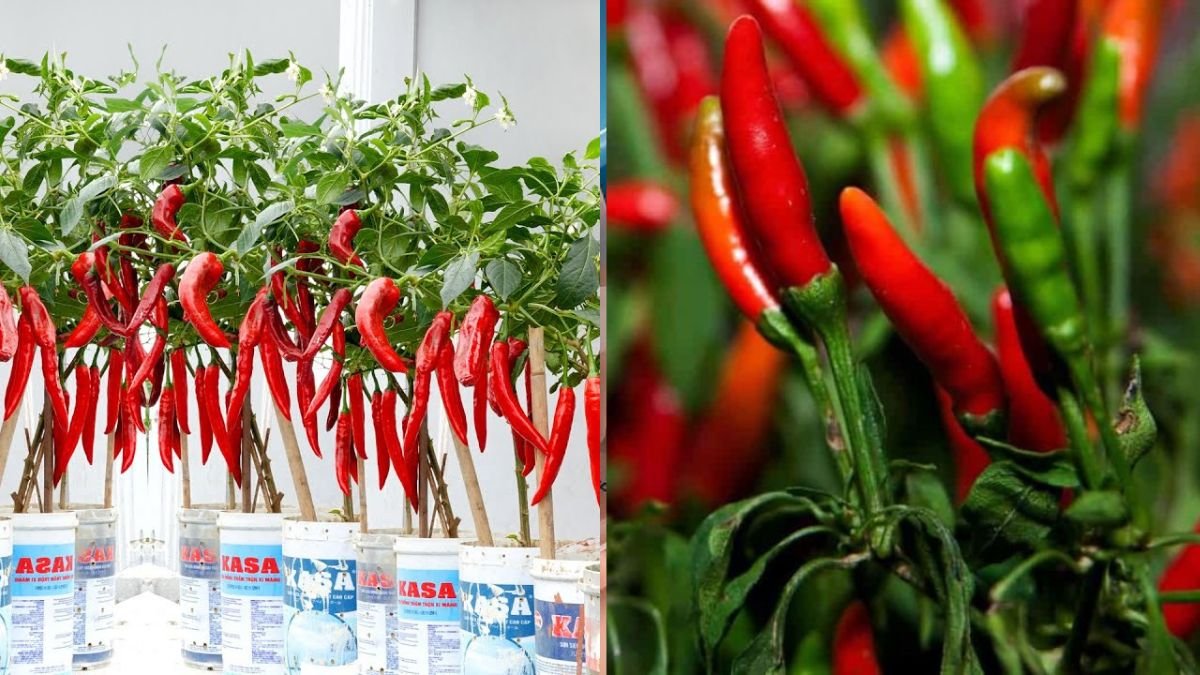
Understanding Chilli Yield Factors
Before diving into the tip itself, it’s important to understand the factors that influence chilli production:
- Sunlight and temperature: Chillies thrive in warm, sunny conditions. Ideal daytime temperatures range between 20–35°C. Lack of sunlight or extreme heat can reduce flowering and fruiting. (rhs.org.uk)
- Nutrient availability: Proper nutrition is crucial. Plants need balanced nutrients for strong growth, but the timing of fertilizers greatly impacts fruit production. (agrifarming.in)
- Watering: Consistent moisture is essential. Irregular watering can cause flower drop and smaller fruit set, while overwatering can lead to root problems.
- Plant structure: The number of branches and flowers directly determines the potential number of fruits. Encouraging branching through pruning techniques can increase yield. (sarahraven.com)
By carefully managing these aspects, gardeners can unlock the full potential of their chilli plants.
The One Simple Tip That Doubles Your Chilli Yield
Among all the methods to improve chilli production, foliar fertilization at the flowering stage has been identified as a game-changer. Foliar feeding involves spraying a nutrient solution directly onto the leaves, allowing the plant to absorb essential nutrients quickly. Unlike soil fertilization, this method delivers nutrients where the plant needs them most — directly to the foliage and growing tips. (j-tropical-crops.com)
Why Foliar Feeding Works
- Rapid Nutrient Uptake: Leaves absorb nutrients faster than roots, particularly in soils that are dry, compacted, or deficient in nutrients.
- Increased Flowering and Fruiting: Targeted feeding during flowering encourages more flowers to set fruit.
- Enhanced Plant Health: Improved nutrition promotes stronger branches and overall plant vigor, supporting higher yields.
Research shows that chilli plants receiving foliar nutrients produce significantly more fruit than those relying solely on soil fertilization. By incorporating this simple tip into your routine, you can dramatically increase your harvest.
Step-by-Step Guide to Applying the Tip
1. Prepare Your Soil
Healthy soil lays the foundation for high yield. Before flowering, use a balanced fertilizer to support vegetative growth. Avoid excessive nitrogen at this stage, as it promotes leaf growth over fruit production. Incorporate organic compost or slow-release fertilizers to enrich the soil. (agrifarming.in)
2. Start Foliar Feeding at Flower Initiation
Once your chilli plants begin flowering, it’s time to start foliar feeding. Use a fertilizer rich in phosphorus and potassium with micronutrients like magnesium and calcium. Spray the solution evenly on both the upper and lower leaf surfaces every 10–14 days, ideally in the early morning or late afternoon to avoid leaf burn. (j-tropical-crops.com)
3. Continue Soil Fertilization
While foliar feeding is powerful, it works best in combination with regular soil fertilization. Apply a potassium-rich fertilizer weekly during the fruiting stage to support strong fruit development. This balanced approach ensures that the plant receives nutrients both above and below ground. (rhs.org.uk)
4. Maintain Consistent Watering and Temperature
Chillies prefer even soil moisture. Mulch around the base to retain water and regulate soil temperature. Avoid overwatering, as this can weaken roots and reduce fruiting. Proper temperature management is also important; temperatures that are too high or low can cause flower drop. (rhs.org.uk)
Additional Tips to Maximize Chilli Production
While foliar feeding is key, combining it with these strategies will further boost yield:
🌞 Optimize Sunlight Exposure
Ensure plants receive at least 6–8 hours of direct sunlight daily. Rotate containers if growing in pots to ensure even light distribution.
✂️ Prune for Branching
Pinch growing tips when plants reach 15–20 cm. This encourages side branching, creating more sites for flowers and fruit. (sarahraven.com)
💧 Mulching and Water Management
Use mulch to retain moisture, reduce weeds, and maintain consistent soil temperatures. Water deeply but avoid soggy soil conditions. (rhs.org.uk)
🐝 Promote Pollination
Even though chillies are self-pollinating, shaking plants gently or attracting pollinators with nearby flowers can improve fruit set and size. (thompson-morgan.com)
Harvesting for Continued Production
Regular harvesting encourages the plant to produce more chillies. Pick fruits when they reach the desired size or color. Leaving fruit too long can slow new flower development, reducing overall yield. (rhs.org.uk)
Common Mistakes to Avoid
- Too much nitrogen during flowering: Leads to lush leaves but fewer fruits. (agrifarming.in)
- Inconsistent watering: Can result in flower drop and smaller fruits.
- Neglecting micronutrients: Foliar feeding helps address deficiencies that soil fertilizer alone might not correct. (j-tropical-crops.com)
Correcting these mistakes ensures healthier plants and higher yields.
Authoritative Sources for Chilli Gardening
- Royal Horticultural Society – Chilli Growing Guide: Detailed instructions on soil, feeding, and care. (rhs.org.uk)
- Journal of Tropical Crop Science – Foliar Fertilization Studies: Research-backed insights into improving chilli yield. (j-tropical-crops.com)
- Agriculture Institute – Seasonal Chilli Cultivation Tips: Guidance for managing chillies in summer and rainy seasons. (agriculture.institute)
- Thompson & Morgan – Chilli Cultivation Tips: Practical guidance for beginners and home gardeners. (thompson-morgan.com)
Conclusion
For gardeners seeking to double their chilli production, foliar fertilization during the flowering stage is a simple yet highly effective strategy. Combined with balanced soil nutrition, pruning, proper watering, and sunlight management, this method helps chilli plants produce more flowers, more fruits, and ultimately higher yields per plant.
By adopting [FOCUS KEYWORD], you can transform an average chilli harvest into an abundant one. Implement this tip in your next growing cycle and watch your chilli plants flourish, delivering bountiful, flavorful harvests for your kitchen and garden.