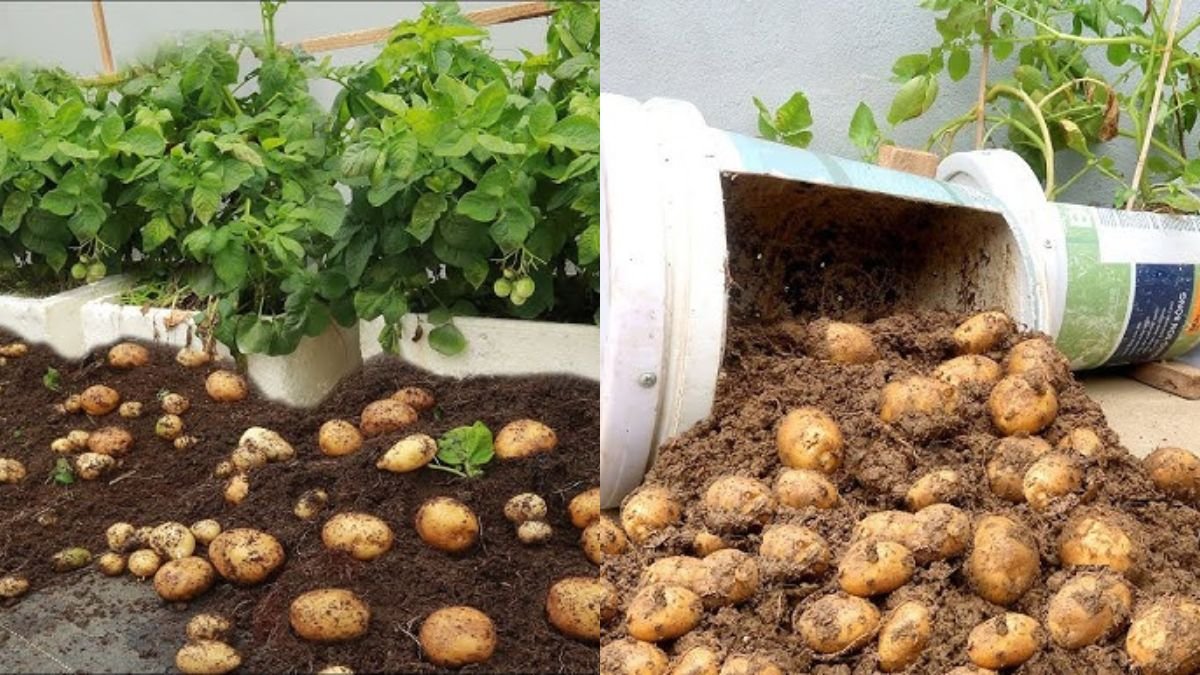
Homegrown potatoes are a favorite among gardeners for several reasons:
- Flavor and Freshness – Homegrown potatoes taste far better than store-bought varieties. Their freshness and natural flavors make them perfect for cooking.
- Economical – Growing potatoes at home reduces grocery costs and allows you to recycle organic waste as compost.
- High Yield Potential – A single seed potato can produce multiple tubers, giving you more harvest than you might imagine.
- Versatility in Growing – Potatoes can be cultivated in garden beds, containers, grow bags, or even vertical towers.
Urban gardeners are increasingly embracing potatoes because they require minimal maintenance and can thrive even in small spaces. Their resilience and productivity make them an ideal crop for beginner and experienced gardeners alike.
Understanding Potato Growth
Potatoes are grown from seed tubers, which are small potatoes or pieces of larger potatoes containing at least one “eye.” When planted in fertile, loose soil, the eyes sprout shoots that grow above ground, while new tubers form below. With proper care, these tubers multiply, producing a surprisingly large harvest.
Many gardeners are amazed at the sheer number of tubers produced from just a few seed potatoes. The key is providing the right growing conditions — good soil, consistent watering, sunlight, and hilling.
Choosing the Right Seed Potatoes
For the best results, always use certified seed potatoes. These are disease-free and specially grown for planting. Avoid using store-bought potatoes, as they may contain chemical sprout inhibitors or carry diseases that can affect growth.
Seed potatoes can be planted whole if they’re small or cut into pieces for larger tubers, ensuring each piece has at least one or two eyes. Allow the cut surfaces to dry for a day or two before planting to prevent rot.
Popular varieties for home gardens include:
- Yukon Gold – Creamy texture and early harvest
- Red Pontiac – Reliable, disease-resistant, great for storage
- Kennebec – High yield, versatile for cooking
- Fingerling – Small, flavorful, perfect for containers
Selecting the right variety ensures faster growth and abundant tuber production.
Preparing the Soil
Potatoes thrive in loose, well-draining soil with high organic content. A slightly acidic soil with a pH between 5.8 and 6.5 is ideal. Incorporating compost, aged manure, or organic fertilizers improves soil fertility and promotes healthy tuber growth.
If your garden has heavy clay or compacted soil, consider raised beds or containers filled with quality soil. Loose soil encourages tubers to expand freely and makes harvesting easier.
Planting Depth and Spacing
Seed potato pieces should be planted 4–6 inches deep, with the eyes facing up. Space pieces 12–15 inches apart, and space rows 24–36 inches apart to allow sufficient airflow and room for hilling.
In containers or grow bags, you can slightly reduce spacing, but make sure each tuber has enough soil around it to expand. Correct spacing ensures healthy growth and maximizes yield potential.
Watering and Moisture Management
Consistent moisture is critical for potatoes. They need approximately 1 inch of water per week, particularly when tubers start forming. Water deeply at the base of the plant, keeping leaves dry to reduce the risk of disease.
Overwatering can cause rot and fungal problems, while underwatering limits tuber growth. Mulching with straw, shredded leaves, or compost helps retain soil moisture and maintain an even temperature, promoting healthy tuber development.
The Importance of Hilling
Hilling is a simple but crucial step to increase potato yields. This involves mounding soil or compost around the base of the plant as it grows.
Benefits of hilling:
- Provides more space for tuber formation along buried stems
- Protects tubers from sunlight, preventing them from turning green and bitter
- Improves drainage and reduces pest exposure
Repeat hilling every few weeks as the plants grow, gradually increasing the soil mound. Proper hilling can dramatically boost the number of tubers per plant.
Sunlight and Temperature
Potatoes require full sunlight, ideally 6–8 hours per day. They grow best in temperatures between 15–25°C (59–77°F). While they tolerate slightly cooler conditions, extreme heat or prolonged high temperatures can slow tuber development.
If you’re growing potatoes in containers, rotate them periodically to maximize sunlight exposure. Mulching also helps maintain stable soil temperatures, protecting tubers from heat stress.
Harvesting Potatoes
You can harvest new potatoes when plants start flowering, usually 8–10 weeks after planting. These small tubers are tender and perfect for immediate cooking.
For full-size, mature potatoes, wait until the foliage dies back. Carefully dig around the base of the plant using a garden fork or spade to avoid damaging the tubers. After harvesting, cure potatoes in a cool, shaded area for a few days to toughen the skin, improving storage life.
Common Mistakes to Avoid
Even simple crops like potatoes can fail without proper care. Avoid these common mistakes:
- Using grocery store potatoes – they may carry diseases and chemical sprout inhibitors.
- Neglecting hilling – reduces tuber numbers and exposes them to sunlight.
- Overwatering – soggy soil promotes rot and fungal infections.
- Planting too shallow – limits tuber growth and exposes tubers to light.
Correcting these mistakes ensures a healthy, productive potato crop.
Creative and Economical Growing Methods
Potatoes are flexible and can be grown in multiple ways to suit your space and budget:
- Grow Bags – Large fabric bags allow deep planting and easy harvesting.
- Containers – Buckets, bins, or repurposed tubs are perfect for small spaces.
- Vertical Towers – Stack layers of soil in barrels or crates for intensive potato production.
- Raised Beds – Improve drainage, soil quality, and make hilling easier.
All these methods are cost-effective, simple to set up, and surprisingly productive.
Authoritative Sources
- University of Minnesota Extension – Growing Potatoes at Home: Comprehensive guidance for soil, planting, and harvest. (extension.umn.edu)
- Iowa State Extension – Home Garden Potatoes: Detailed step-by-step instructions and tips for beginners. (yardandgarden.extension.iastate.edu)
- Homes & Gardens – How to Grow Potatoes: Container, raised bed, and vertical potato growing ideas. (homesandgardens.com)
- Next Step Living – Beginner Potato Growing Tips: Easy-to-follow techniques for higher yields. (nextstepliving.com)
These sources provide practical, reliable, and tested methods for successful home potato cultivation.
Final Thoughts
Growing potatoes at home is surprisingly simple and highly rewarding. With proper seed selection, soil preparation, watering, hilling, and harvesting, even a small garden or container can yield a bounty of tubers. Many gardeners are amazed at how productive their potatoes become — it’s truly a crop that delivers more than expected.
Whether you’re a beginner looking for an easy vegetable to start with or an experienced gardener aiming to maximize yield, potatoes are perfect. By following these proven techniques, you’ll enjoy a continuous harvest of fresh, homegrown potatoes — simple, satisfying, and economical.