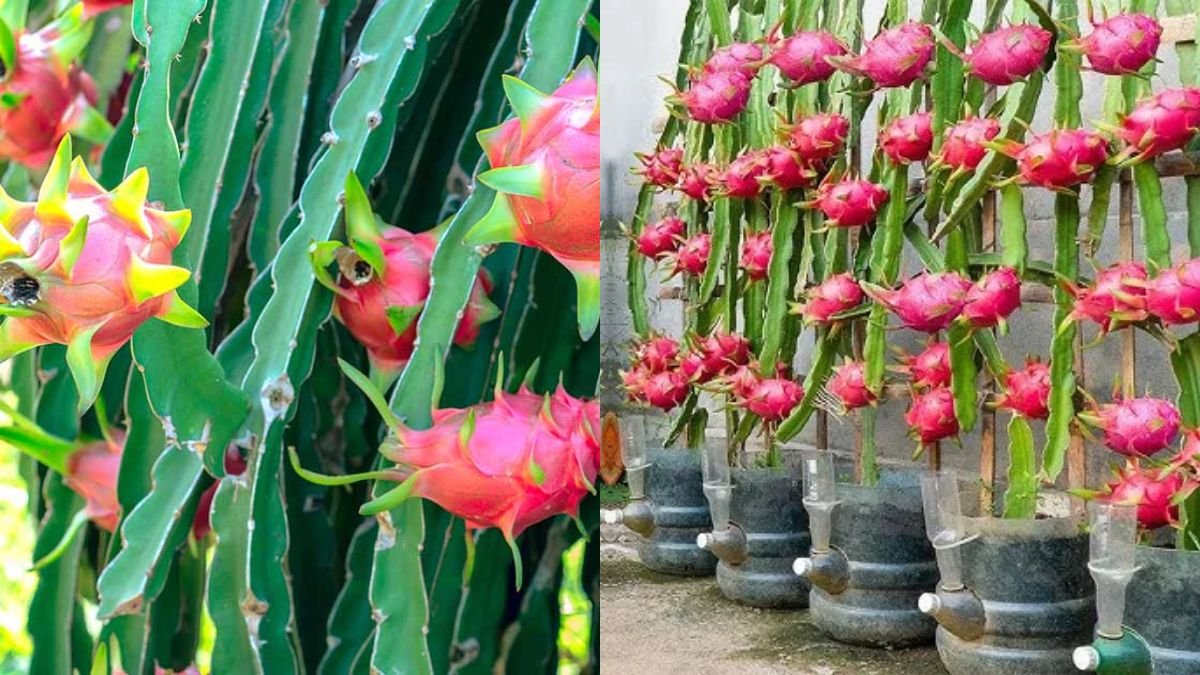
Introduction – The Rise of Home-Grown Dragon Fruit
Dragon fruit, also known as pitaya, has become increasingly popular among home gardeners due to its striking appearance, nutritional benefits, and delicious flavor. This tropical cactus plant produces vibrant pink or yellow fruits with sweet, juicy flesh that is perfect for smoothies, desserts, or fresh eating.
The good news for urban gardeners is that dragon fruit is easy to grow at home, even in pots, balconies, or small garden spaces. With proper care, a single plant can produce multiple fruits per season, making it a high-yield, rewarding crop. Recent gardening news highlights how home growers are achieving bountiful harvests using simple container-based setups. (agrifarming.in)
Whether you’re a beginner or an experienced gardener, dragon fruit offers a combination of beauty, taste, and productivity that makes it ideal for home cultivation.
Why Grow Dragon Fruit at Home?
Dragon fruit has several characteristics that make it perfect for home gardening:
- 🍉 Delicious and nutritious: Rich in vitamins, antioxidants, and dietary fiber.
- 🌿 Easy to grow: Can thrive in pots or containers with minimal maintenance.
- 🌞 High yield: A mature plant can produce multiple fruits per season.
- 🏡 Space-efficient: Ideal for balconies, terraces, and small garden areas.
- 💧 Drought-tolerant: Requires less water than many other fruiting plants. (hindi.moneycontrol.com)
Urban gardening trends show that even limited spaces can produce abundant, high-quality fruits when plants are grown vertically and cared for properly. Dragon fruit is an excellent example of a plant that combines visual appeal and edible bounty. (gnttv.com)
Choosing the Right Variety
Dragon fruit comes in several varieties, including:
- Red-fleshed fruit (Hylocereus costaricensis): Sweet and slightly tangy, great for fresh consumption.
- White-fleshed fruit (Hylocereus undatus): Mildly sweet, easier to grow in varied climates.
- Yellow dragon fruit (Hylocereus megalanthus): High sugar content and compact growth, ideal for containers.
For home gardeners, self-fertile and container-friendly varieties are recommended, as they establish quickly and produce fruit faster. Using cuttings instead of seeds is preferable because cuttings establish faster, reduce the waiting period, and often yield more fruit in the first season. (taim.io)
Step 1: Selecting Containers and Soil
Dragon fruit can be successfully grown in large pots or grow bags. Recommended dimensions:
- Minimum 18–24 inches in diameter and depth
- Drainage holes to prevent waterlogging
A strong, deep container also stabilizes the plant as it grows taller and bears heavy fruits.
Ideal soil mix for dragon fruit:
- 40% garden soil
- 30% compost
- 20% perlite or pumice
- 10% coarse sand
This combination ensures proper drainage, nutrient availability, and root aeration, which are critical for the health and productivity of the plant. (timesofindia.indiatimes.com)
Step 2: Providing Vertical Support
Dragon fruit is a climbing cactus that requires vertical support for optimal growth and fruiting:
- Use a sturdy pole, trellis, or post at least 5–6 feet tall.
- Gently tie the stems as they grow to prevent breakage.
Vertical growth improves air circulation, maximizes sunlight exposure, and reduces the risk of fungal diseases. It also allows the plant to bear more fruit per stem efficiently. (gnttv.com)
Step 3: Positioning for Sunlight
Dragon fruit thrives in 6–8 hours of direct sunlight daily. For balcony gardeners:
- South or west-facing spots are ideal.
- If sunlight is too harsh in the afternoon, provide partial shade to prevent sunburn on young stems.
Adequate sunlight is essential for flowering and fruit development, directly affecting the yield and sweetness of the fruits. (agrifarming.in)
Step 4: Watering Guidelines
While dragon fruit is drought-tolerant, balanced watering is crucial, especially during active growth:
- Summer: Water deeply once every 5–7 days, ensuring the soil is dry on the surface before watering.
- Monsoon: Water only if the soil is dry to prevent root rot.
- Winter: Water once every 10–14 days when growth slows.
Overwatering is the most common cause of plant stress and root rot, so a moderate approach is key. (agrifarming.in)
Step 5: Fertilizing and Feeding
Fertilize dragon fruit for optimal flowering and fruiting:
- Use an organic compost fertilizer or a cactus-specific nutrient mix.
- Fertilize every 4–6 weeks during the growing season (spring through early autumn).
- Reduce feeding in winter when growth slows. (taim.io)
This encourages strong stem growth and abundant flowering, which translates into higher fruit yields.
Step 6: Flowering and Harvesting
- Dragon fruit blooms produce large, fragrant flowers at night.
- Fruit ripens 30–50 days after flowering, depending on the variety.
- Harvest when the skin is bright pink, red, or yellow and slightly soft to touch.
Proper harvesting ensures maximum sweetness and flavor, and encourages the plant to continue producing new flowers and fruits. (agrifarming.in)
Advantages of Home-Grown Dragon Fruit
- 🌟 Delicious and Nutritious: Packed with vitamins, antioxidants, and fiber.
- 🌱 High Yield: Multiple fruits per plant per season with proper care.
- 🏡 Space-Efficient: Grows well in pots, balconies, or terraces.
- 💧 Low Maintenance: Drought-tolerant and easy to manage once established.
Home-grown dragon fruit offers fresh, chemical-free produce while adding greenery and visual appeal to small living spaces. (gnttv.com)
Common Challenges and Solutions
- Overwatering: Leads to root rot. Water only when the soil is dry.
- Insufficient sunlight: Reduces flower and fruit production. Ensure 6+ hours of sun.
- Weak support structures: Can break under heavy fruit. Use sturdy trellises or poles.
- Slow flowering: Prune weak or interior stems to redirect energy to fruiting. (taim.io)
Addressing these challenges ensures healthy plants and high-yielding fruits.
Authoritative Sources for Further Reading
- AgriFarming: How to Grow Dragon Fruit at Home – Comprehensive step-by-step guide. (agrifarming.in)
- GNT TV: Growing Dragon Fruit at Home – Practical tips for container setups. (gnttv.com)
- Taim.io: Dragon Fruit Care Guide – Nutrient, soil, and sunlight details. (taim.io)
- Times of India: Balcony Gardening Tips – Step-by-step guide for pots and terraces. (timesofindia.indiatimes.com)
Conclusion – Start Growing Dragon Fruit at Home Today
Growing dragon fruit at home is easy, productive, and highly rewarding. With the right container, soil, vertical support, sunlight, and moderate watering, even a small balcony or terrace can produce delicious, high-yield fruits.
From its large, fragrant flowers to its sweet, juicy flesh, dragon fruit is both beautiful and tasty, making it an ideal home garden crop. Whether you want fresh fruits for your kitchen, a unique garden display, or a sustainable urban growing project, dragon fruit offers a perfect combination of flavor, nutrition, and productivity.