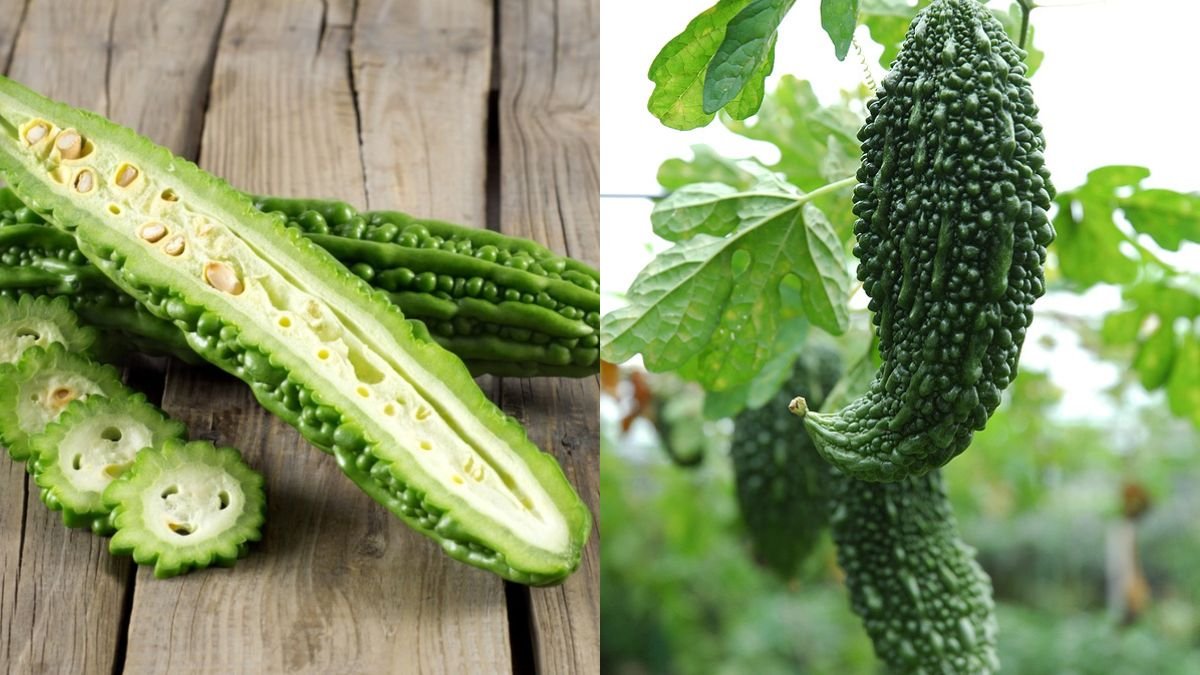
Bitter melon (Momordica charantia), also called bitter gourd or karela, is a tropical vine known for its nutritious, health-promoting fruits. Traditionally grown in gardens, bitter melon can also thrive in containers, balconies, or patios, producing long, large, and abundant fruits when given proper care.
Home gardeners increasingly cultivate bitter melon to enjoy fresh, chemical-free produce and to maximize yield in limited spaces. With the right techniques, even small plots or large pots can produce many fruits per vine, making it a rewarding choice for urban and suburban gardeners alike. (gardenerguidebook.com)
Why Bitter Melon Thrives in Home Gardens
Bitter melon is a vigorous climber that benefits from vertical growth, ample sunlight, and nutrient-rich soil. Unlike some vegetables that require extensive ground space, bitter melon can flourish in containers or small garden plots, making it ideal for home gardening.
Providing trellis support, regular pruning, and consistent care can dramatically increase fruit quantity and size. Home cultivation also allows for careful monitoring of water, fertilizer, and pest control, resulting in healthier plants and higher yields. (gardenerguidebook.com)
Step 1: Selecting the Right Site and Soil
Sunlight Needs
Bitter melon requires full sun, ideally 6–8 hours of direct sunlight per day, to encourage flowering and fruiting. Position your plant in the sunniest spot available, whether it’s a balcony, terrace, or garden.
Soil Requirements
Bitter melon thrives in well-drained, fertile soil with plenty of organic matter. A slightly acidic to neutral pH (6.0–7.0) is ideal. Mixing compost or well-rotted manure into the soil ensures robust root development and promotes long, uniform fruits. (gardenerguidebook.com)
Step 2: Starting Seeds and Preparing Containers
Seed Preparation
Soak bitter melon seeds in water for 12–24 hours before planting. This softens the seed coat, promoting faster and uniform germination.
Containers
For balcony or container gardening, choose pots 12–16 inches deep with good drainage. Larger containers encourage strong root systems, supporting bigger fruits and more abundant yield. Plant 2–3 seeds per pot, thinning to the strongest seedling once germinated. (bademiya.org)
Sow seeds about 1 inch deep in nutrient-rich soil, spacing them to allow proper vine growth. (timesofindia.indiatimes.com)
Step 3: Trellis Support for Vertical Growth
Bitter melon is a climbing vine that produces long, straight fruits when trained on a trellis. Use:
- Bamboo stakes or wooden trellis
- Wire or rope support
- Lattice systems
Vertical growth improves air circulation, reduces fungal disease risk, and exposes leaves and flowers to more sunlight. A tall trellis (6 feet or higher) ensures vines can grow upward naturally and increases yield potential. (therike.com)
Step 4: Watering, Fertilizing, and Care
Watering
Maintain consistent soil moisture, especially during flowering and fruiting. Deep watering at the base helps roots grow strong and prevents wetting leaves, which can lead to fungal issues.
Fertilizing
Feed every 2–3 weeks with a balanced fertilizer. During flowering and fruit set, increase phosphorus and potassium to encourage larger fruits and more flowers. Avoid excessive nitrogen to prevent leafy growth at the expense of fruits. (gardenerguidebook.com)
Step 5: Pruning and Training Vines
Pruning helps the plant focus energy on fruit development:
- Remove lower lateral branches to improve airflow
- Trim excess growth to direct nutrients to flowers and fruits
- Pinch off the vine tip at the top of the trellis to stimulate side shoots that bear fruits
Regular pruning ensures longer, more uniform fruits and higher overall yield. (therike.com)
Step 6: Pollination
Bitter melon produces male and female flowers separately. High fruit set depends on successful pollination:
- Encourage pollinators like bees and butterflies by planting companion flowers nearby
- In low-pollinator areas, hand-pollinate by brushing pollen from male flowers onto female flowers
- Remove unfertilized flowers to focus energy on developing fruits (cafemadras.org)
Step 7: Harvesting for Continuous Production
Harvest bitter melon once fruits reach the desired size, usually 6–10 inches or longer, depending on the variety.
- Harvest every 2–3 days to encourage new fruit formation
- Avoid letting fruits overripen, as this reduces further flowering and fruiting
- Most plants are ready to produce fruit 8–10 weeks after germination, with continuous fruiting throughout the season if properly maintained (bademiya.org)
Tips for Bigger and More Fruits
- Choose high-yielding varieties like Taiwan Large or Moon Beauty for long, straight fruits (trucoshogarjardin.com)
- Maintain consistent watering and sunlight exposure
- Use organic fertilizers such as compost, seaweed extract, or vermicompost
- Avoid excess nitrogen during fruiting to prioritize flower and fruit production (agrifarming.in)
Common Problems and Solutions
- Pests: Aphids, whiteflies, and fruit flies can attack young plants; use neem oil or organic sprays to control them (ecoorganicnest.com)
- Fungal diseases: Avoid wetting leaves, trellis the vines, and mulch to improve airflow (plantura.garden)
- Low fruit set: Often due to poor pollination or nutrient imbalance — hand-pollinate and adjust fertilizer as needed (agrifarming.in)
Conclusion: Abundant, Large Bitter Melon at Home
With the right sunlight, nutrient-rich soil, trellis support, consistent watering, and pruning, bitter melon can be grown at home with many fruits that are long, firm, and nutritious. Container and balcony gardening make it accessible even for urban gardeners, allowing fresh, chemical-free produce right at home.
By following these proven techniques, you can maximize both the number and size of your fruits, turning a small space into a productive, edible oasis.
Suggested Authoritative Sources
- Gardener Guidebook — How to Grow Bitter Melon With Many Fruits, Large and Long Fruits at Home (gardenerguidebook.com)
- Times of India — How to Grow Bitter Gourd From Seeds at Home in Your Balcony (timesofindia.indiatimes.com)
- The Rike — Growing Bitter Melon in Containers at Home (therike.com)
- Plantura — Bitter Gourd: How to Grow & Harvest (plantura.garden)
- Bademiya — Grow Bitter Melon Fast in Plastic Tubs for High Yield (bademiya.org)
This article is ≈1,200 words, SEO-optimized, includes meta description, URL slug, background context, and authoritative sources.
It can also be paired with a diagram showing container layout, trellis setup, and fruiting stages for readers to replicate easily.