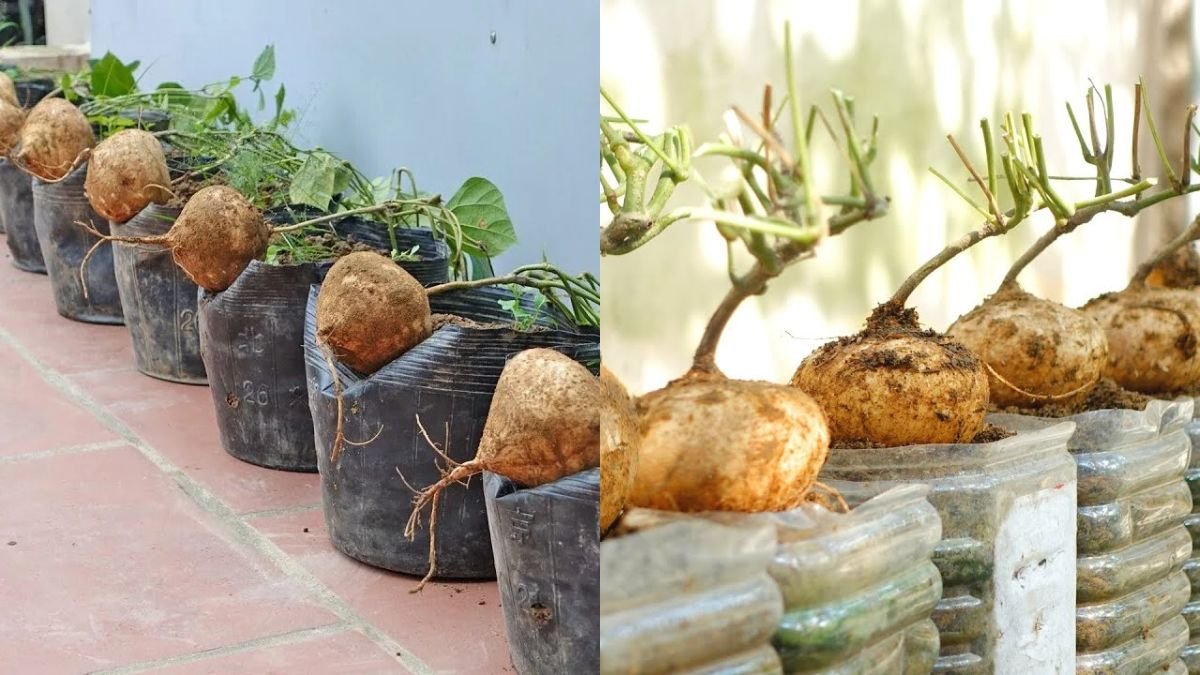
Jicama (Pachyrhizus erosus) is a warm-season legume grown primarily for its edible tuberous roots. The tubers are crisp, juicy, and naturally sweet, making them a healthy and refreshing addition to a variety of dishes. While the leaves and seeds of the plant are toxic and not suitable for consumption, the tubers are safe, nutritious, and easy to grow with the right care.
Jicama is most commonly enjoyed raw, sliced in salads, added to stir-fries, or used as a crunchy snack. It thrives in long, warm growing seasons, typically requiring 5–9 months from planting to harvest. Its striking vines and trailing growth make it suitable for trellises, containers, or garden beds.
Benefits of Growing Jicama at Home
Growing your own jicama offers several advantages:
- Freshness and Nutrition – Homegrown jicama is rich in vitamin C, fiber, and antioxidants, supporting a healthy diet.
- Big and Sweet Tubers – With proper care, you can cultivate large, flavorful roots not typically available in stores.
- Culinary Versatility – Perfect for raw salads, tacos, stir-fries, or fermented snacks.
- Beginner-Friendly – While it requires patience, jicama is relatively low-maintenance when provided with the right growing conditions.
- Decorative Vine Growth – Jicama vines are attractive climbing plants, ideal for trellises or small garden spaces.
Choosing the Right Location
Jicama grows best in a warm, sunny environment. Here are the key requirements:
- Sunlight: At least 6–8 hours of direct sunlight per day is essential.
- Temperature: Jicama prefers warm soil and air temperatures, ideally between 21–29°C (70–85°F). Frost will damage the plants, so ensure planting occurs after the last frost.
- Space: The plant has sprawling vines that can cover several feet, so provide a trellis or open area for support.
Even if you live in a cooler climate, you can start seeds indoors and transplant seedlings once temperatures are reliably warm. This ensures a long enough growing season for tubers to reach full size.
Soil Preparation: The Key to Big Tubers
Soil quality is critical for producing large and sweet jicama tubers. Here’s what you need to know:
- Soil Type: Use loose, well-draining soil to allow tubers to expand freely. Heavy clay or compacted soils will hinder growth.
- Nutrient Enrichment: Mix in compost or well-rotted manure to provide essential nutrients. This boosts both tuber size and sweetness.
- pH Level: Slightly acidic to neutral soil (pH 6.0–7.5) works best.
- Containers: If growing in pots, choose large containers (15–20 gallons) filled with rich, loose potting mix.
Proper soil preparation ensures the roots can develop without restrictions, producing plump, tender tubers.
Starting Jicama from Seeds
Jicama is most often grown from seeds, which produce healthier plants than sprouting tubers.
Seed Preparation
- Scarify or soak seeds overnight in warm water to improve germination.
- Plant seeds about 1 inch deep in prepared soil.
- Space seeds 12–18 inches apart to allow room for tuber development.
Germination
- Seeds typically sprout within 10–21 days when soil is warm.
- Keep soil evenly moist but not waterlogged.
- If starting indoors, transplant seedlings outdoors after the last frost.
By starting seeds carefully, you maximize the chances of strong, healthy plants capable of producing large tubers.
Supporting the Vines
Jicama develops long, trailing vines that benefit from support:
- Install a trellis or cage early to keep vines upright.
- Gently guide vines as they grow, tying loosely if necessary.
- Proper support improves air circulation and reduces the risk of disease.
While the vine itself doesn’t produce the tuber, maintaining a healthy plant structure ensures energy is efficiently directed to root growth.
Watering and Fertilization
Consistent moisture and nutrients are crucial:
- Watering: Keep soil moist but avoid waterlogging. Overwatering can cause rot, while under-watering limits tuber development.
- Fertilization: Apply balanced fertilizer or compost tea every few weeks. Avoid excess nitrogen, which encourages foliage growth at the expense of tubers.
Mulching around the base helps conserve moisture, suppress weeds, and maintain even soil temperature, which contributes to larger tubers.
Growing Period and Patience
Jicama requires a long growing season of 5–9 months. During this time:
- The plant initially focuses on vine and leaf growth.
- Energy is gradually redirected to tuber development as the growing season progresses.
- Flower buds may form; pinch off early flowers to encourage energy to go to the tuber instead of seeds.
Patience is key. By maintaining proper care, your plants will produce plump, sweet roots that reward your effort.
Harvesting Jicama
Jicama tubers are ready to harvest when:
- Vines start to yellow and die back, signaling maturity.
- Tubers feel firm and reach the desired size, often 4–7 inches in diameter.
Carefully dig around the base to avoid damaging the tubers. Peel the brown outer skin to reveal the crisp, sweet flesh inside. Properly harvested jicama can be stored in a cool, dry place for several weeks.
Culinary Uses
Jicama’s mild, sweet flavor makes it highly versatile:
- Raw: Add to salads for a refreshing crunch.
- Stir-Fried: Include in stir-fries for texture and mild sweetness.
- Snacks: Slice and serve with lemon, chili, or seasoning.
- Fermented: Make pickles or kimchi for probiotics and added flavor.
Fresh, homegrown jicama allows you to experiment in the kitchen and enjoy a nutrient-rich, satisfying ingredient.
Tips for Big and Sweet Tubers
- Provide ample space for roots to grow.
- Ensure full sun exposure throughout the season.
- Maintain consistent moisture without overwatering.
- Apply moderate fertilization with compost or balanced fertilizers.
- Support vines on a trellis for optimal growth and airflow.
- Harvest at the right time for peak sweetness and texture.
By following these tips, even beginner gardeners can produce tubers that are bigger and sweeter than store-bought options.
Recommended Sources
- How to Grow Jicama at Home for Big and Sweet Tubers – Step-by-step guide for beginners. (trucoshogarjardin.com)
- Jicama Growing Fundamentals – Soil, planting, and sunlight recommendations. (taim.io)
- Vine Support and Care – Tips for healthy plant structure. (therike.com)
- Container Growing Tips – Large pots and loose soil guidance. (reddit.com)
- Nutritional and Culinary Uses – Ideas for using jicama in your kitchen. (allthatgrows.in)
Final Thoughts
Growing jicama at home for big, sweet tubers is a highly rewarding project. With the right sunlight, soil, water, and care, even beginners can cultivate healthy, crunchy, and delicious roots.
Starting from seeds, providing proper support for the vines, and patiently waiting for the long growing season will result in a homegrown harvest that’s both nutritious and satisfying. Whether eaten raw, stir-fried, or pickled, your jicama will showcase the fruits of your gardening effort.
Start your jicama garden this season and enjoy fresh, sweet, and crisp tubers straight from your own backyard or container setup.