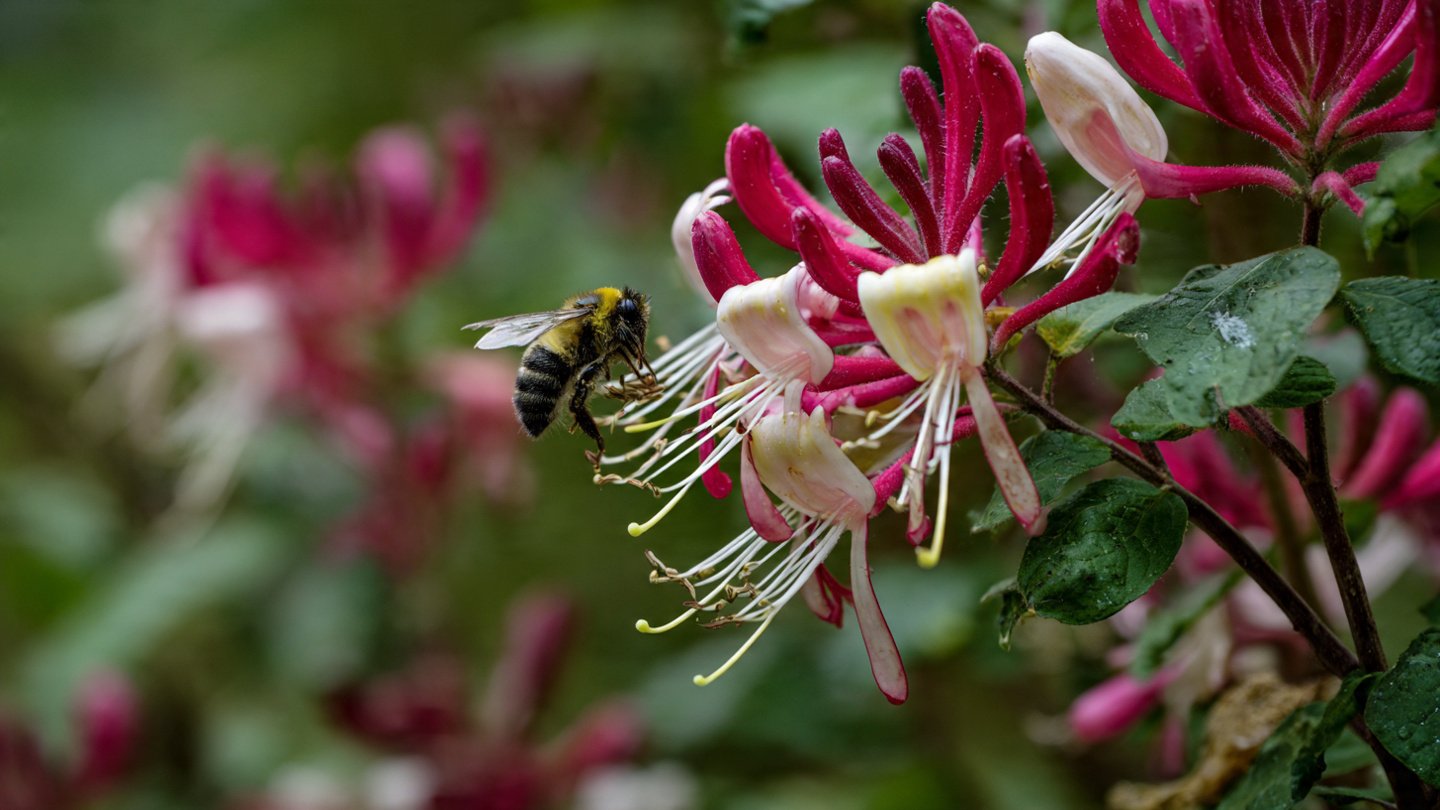
Creating a vertical honeysuckle garden is a rewarding way to attract honeybees while maximizing your garden space. This approach not only beautifies your surroundings but also contributes to local ecosystems. By understanding the needs of honeysuckle, honeybees, and garden design, you can create an inviting habitat for these essential pollinators. Here’s a comprehensive guide to help you cultivate a vertical honeysuckle garden that attracts honeybees and promotes biodiversity.
Understanding Honeysuckle
Honeysuckle is a group of climbing plants known for their fragrant flowers and sweet nectar. These plants belong to the Caprifoliaceae family and are favored by various pollinators, especially honeybees. While there are many honeysuckle species, the two most commonly planted varieties for gardens are:
- Lonicera periclymenum (European Honeysuckle): Known for its tubular flowers and vigorous climbing ability.
- Lonicera japonica (Japanese Honeysuckle): A fast-growing vine with fragrant white and yellow flowers.
Both species attract not only honeybees but also butterflies and hummingbirds, contributing to the garden’s beauty and ecosystem.
Benefits of a Vertical Garden
Vertical gardening is an innovative way to maximize space, especially for those with limited yard area. Here are some advantages:
- Space Efficiency: Vertical gardens allow you to utilize vertical space, enabling more plants in smaller areas.
- Enhanced Air Circulation: Elevating plants helps improve air circulation, reducing common plant diseases.
- Reduced Ground Space: By growing upwards, you can save ground space for other plants or features in your garden.
- Aesthetic Appeal: Vertical gardens create striking visual interest, adding beauty to any landscape.
Choosing the Right Location
Before planting, it’s crucial to select an appropriate location. Honeybees are attracted to sunny, sheltered places where they can forage. Here are some factors to consider:
- Sunlight: Honeysuckle thrives in full sun to partial shade. Aim for at least 6–8 hours of sunlight daily.
- Shelter: Position your garden near structures or other plants to protect it from strong winds.
- Accessibility: Ensure the garden is easily accessible for maintenance and observation.
Preparing the Soil
Healthy soil is vital for your honeysuckle’s growth. Here’s how to prepare it:
- Test the Soil: Use a soil test kit to check pH levels and nutrient content. Honeysuckle prefers slightly acidic to neutral pH (6.0 to 7.0).
- Amend the Soil: Based on your soil test, add amendments like compost, well-rotted manure, or organic fertilizers to boost nutrient content and improve drainage.
- Tilling: Loosen the soil to a depth of about 12 inches to enhance aeration and root development.
Selecting Vertical Supports
To create a vertical honeysuckle garden, you’ll need structures for the plants to climb. Here are several options:
- Trellises: Wooden or metal trellises are common and can provide a sturdy support for climbing honeysuckle.
- Arbors and Pergolas: These larger structures can create shaded areas and serve as focal points in your garden.
- Fences and Walls: Utilize existing fences or walls by planting honeysuckle at the base, allowing it to climb.
- Wire Frames: String wire between posts for a minimalist option that allows honeysuckle to twine as it grows.
Planting Techniques
Once your site is prepared, it’s time to plant your honeysuckle:
- Choosing Plants: Select healthy, disease-free honeysuckle plants suitable for your climate zone.
- Spacing: Plant honeysuckle vines at least 2–3 feet apart to allow adequate growth and airflow.
- Planting Depth: Dig holes deep enough to accommodate the root ball, but keep the crown of the plant slightly above the soil line to prevent rot.
- Watering: Water the plants thoroughly after planting. Consistent moisture helps establish roots, especially during dry periods.
Attracting Honeybees
To further enhance your garden’s appeal to honeybees, consider the following strategies:
- Companion Planting: Combine honeysuckle with other bee-friendly plants, such as lavender, sunflower, or coneflower, to create a diverse foraging area.
- Provide Water: Set up shallow water sources, like birdbaths or small containers with pebbles, allowing bees to drink without drowning.
- Avoid Pesticides: Use organic gardening practices whenever possible to protect honeybees from harmful chemicals. Pesticides can be detrimental to bee populations, so always opt for natural alternatives.
Maintenance
Caring for your vertical honeysuckle garden involves regular maintenance:
- Pruning: Light pruning helps manage growth and encourages more blooms. Aim to prune after flowering to keep plants healthy.
- Watering: During dry spells, make sure to provide adequate water, especially if the plants are young or newly established.
- Fertilization: Feed honeysuckle with a balanced, slow-release fertilizer in early spring to promote vigorous growth.
- Weed Control: Regularly check for weeds that may compete with your honeysuckle. Mulching around the base of the plants can suppress weed growth.
Seasonal Considerations
Throughout the seasons, your vertical honeysuckle garden will require different care:
- Spring: As the growing season begins, check for any winter damage and remove dead wood. This is also a good time for fertilization and establishing companion plants.
- Summer: Ensure the plants receive enough water during hot weather and monitor for pests. This is also when blooms will attract honeybees, so enjoy the activity!
- Fall: After flowering, you can lightly prune your honeysuckle to prepare it for winter. Consider adding organic matter to enrich the soil as you approach dormancy.
- Winter: Protect the base of the plants with mulch and ensure any climbing structures remain intact. If you live in colder regions, consider wrapping tender varieties in burlap for insulation.
Observing the Pollinators
One of the greatest joys of cultivating a vertical honeysuckle garden is watching honeybees and other pollinators at work. Here’s how to make the most of this experience:
- Create a Bee Journal: Document the different species of bees you observe, as well as their behavior. This can help you understand the diversity of pollinators attracted to your garden.
- Photography: Capture images of bees foraging on your honeysuckle flowers. This can be a rewarding way to appreciate their role in the ecosystem.
- Education: Share your experience with friends, family, and the community. Teaching others about the importance of bees can inspire more people to create pollinator-friendly gardens.
Challenges and Solutions
While cultivating a vertical honeysuckle garden is largely rewarding, you may encounter challenges:
- Pests: Honeysuckle can attract pests, such as aphids or spider mites. Handpicking, spray solutions, or introducing beneficial insects can help manage pest populations.
- Diseases: Fungal diseases may arise in humid conditions. Ensure proper spacing and airflow to reduce the likelihood of disease development.
- Invasiveness: Be cautious of certain honeysuckle species, particularly the Japanese honeysuckle, which can be invasive in some areas. Always research local guidelines to select non-invasive varieties.
Conclusion
Cultivating a vertical honeysuckle garden offers an excellent opportunity to support honeybees while beautifying your outdoor space. By carefully selecting plants, creating supportive structures, and providing the right conditions, you can create a thriving garden. The resulting habitat will not only attract honeybees but also foster a rich, diverse ecosystem that benefits both your garden and the environment at large. Take pride in your contributions to local biodiversity, and enjoy the vibrant life your vertical honeysuckle garden will bring!