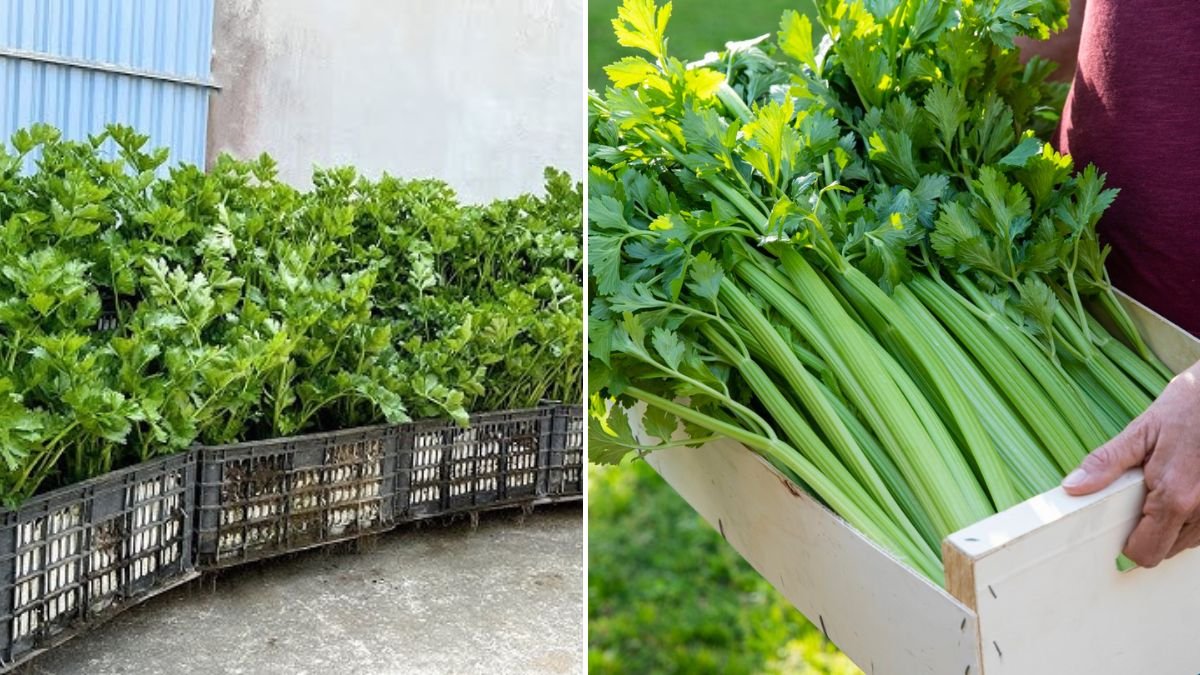
🌱 Why Traditional Celery Growing Needs So Much Water
Celery’s high water content makes it extremely sensitive to inconsistent moisture. In conventional gardens, celery requires:
- Frequent irrigation to prevent dry soil
- Constant moisture at the root level to produce tender stalks
- Mulch to reduce evaporation and maintain even soil moisture (harvesttotable.com)
Without proper watering, celery stalks become tough, stringy, or bitter. This challenge has led gardeners to explore alternative cultivation methods that reduce or eliminate soil watering while still producing high-quality plants.
💡 The Concept: Grow Celery Without Watering
“Growing celery without watering” doesn’t mean the plant survives without water. Instead, it refers to alternative systems that provide consistent moisture without frequent watering, making cultivation less labor-intensive and more sustainable.
The two main approaches are:
- Regrowing celery in water
- Hydroponic cultivation, especially the passive Kratky method
These methods conserve water, reduce maintenance, and can yield tender, flavorful celery throughout the year. (dirtgreen.com)
🪴 1. Regrowing Celery in Water
One of the simplest methods is regrowing celery from store-bought scraps. You don’t need soil or regular watering. Here’s how it works:
- Place the base of the celery in a glass or shallow container of water.
- Ensure only the bottom is submerged while leaves stay above water.
- Place the container in bright, indirect sunlight.
- Change the water every few days to prevent odors and algae growth. (dirtgreen.com)
Advantages:
- No soil to dry out
- Continuous harvesting for weeks from the same base
- Very low maintenance
Although this method produces smaller stalks than full-field planting, it provides a constant supply of tender, edible celery leaves and stalks suitable for cooking or salads.
🛠️ 2. Hydroponic Celery: Passive Kratky Method
For gardeners aiming for higher yields and year-round harvests, hydroponics is the solution. The Kratky method is a passive hydroponic system that does not require pumps or daily watering. (kratkycelery.com)
How it works:
- Fill a water reservoir with a nutrient solution.
- Suspend celery roots above the water in net pots.
- Roots grow down into the nutrient-rich water, absorbing moisture and nutrients continuously.
- As plants use water, an air gap forms at the top of the reservoir, allowing roots to access oxygen without additional intervention.
Benefits:
- Water-efficient: uses significantly less water than soil gardening
- Year-round growth: can grow indoors with controlled light and temperature
- Pest-free: no soil means fewer pests or diseases
- Low maintenance: set up once, minimal ongoing effort
Hydroponic systems can produce robust, tender celery stalks, often outperforming traditional soil-grown plants in both yield and consistency.
🌿 Steps to Grow Celery Without Watering
Here’s a practical guide for both regrowing in water and hydroponic methods:
🌱 Step 1: Start with Healthy Celery
- For regrowth: choose fresh, firm celery bases from the supermarket or your garden.
- For hydroponics: start with seedlings or cuttings with healthy root systems.
Avoid limp or old plants as they are less likely to establish successfully.
💧 Step 2: Select Your System
Regrow in Water (Beginner-Friendly):
- Place celery bases in a shallow container with water.
- Keep the cut end submerged and position in bright indirect sunlight.
- Refresh water every 3–4 days to maintain cleanliness. (dirtgreen.com)
Kratky Hydroponics (High Yield):
- Fill a reservoir with water and balanced nutrient solution.
- Place celery roots into net pots suspended above the water.
- As plants grow, water level naturally drops, forming an oxygen gap for roots. (kratkycelery.com)
This method allows celery to grow robustly without traditional soil watering.
🌾 Step 3: Maintain Light and Temperature
- Provide 6–8 hours of light daily; use grow lights for indoor setups.
- Keep temperatures moderate, ideally between 60–75°F (15–24°C).
Light and temperature control optimize photosynthesis and accelerate growth.
✂️ Step 4: Harvest Strategically
- Cut outer stalks first, leaving the inner core to continue growing.
- Regrowing in water allows multiple harvest cycles from the same base.
- In hydroponics, nutrient solutions maintain continuous growth for a year-round harvest.
This strategy maximizes yield and ensures you can enjoy fresh celery almost every day. (kratkycelery.com)
🌾 Tips from Experienced Growers
- Regrow celery from store scraps to get a steady supply without soil.
- Use mulch or water reservoirs to minimize evaporation in traditional soil setups. (plantisima.com)
- Hydroponics significantly reduces water usage while increasing growth efficiency.
Even beginners can experiment with these methods and see consistent results.
📊 Why These Methods Yield 10 Times More
Hydroponics and water-based systems deliver nutrients directly to the roots, reducing plant stress caused by drought or uneven watering. Studies have shown that controlled nutrient and moisture conditions in hydroponic setups result in faster growth and higher productivity. (biochemjournal.com)
Passive hydroponics also allows for continuous harvesting cycles, meaning the same plants can produce multiple yields throughout the year, multiplying the output compared to traditional soil gardening.
📚 Authoritative Sources
- Kratky Celery — Hydroponic Basics: Passive hydroponics setup for high-yield celery. (kratkycelery.com)
- Growing Celery in Water: Step-by-step low-maintenance water method. (dirtgreen.com)
- Celery Care Through the Growing Season: Insights into traditional care adapted for low-water systems. (harvesttotable.com)
- Stop Buying Celery — Grow at Home: Tips to grow a steady supply while reducing watering. (plantisima.com)
These resources provide expert guidance, troubleshooting, and inspiration for low-water celery cultivation.
🌿 Final Thoughts
The concept to Grow Celery Without Watering – Harvest All Year, Yield 10 Times More! is more than a gardening hack — it’s a sustainable, efficient way to enjoy fresh, crisp celery year-round. Whether you’re regrowing scraps in water or implementing a passive hydroponic system, these methods reduce labor, save water, and allow for continuous harvests. (kratkycelery.com)
For beginners or urban gardeners with limited space, these systems are game-changers. By adopting low-maintenance strategies, anyone can produce nutrient-rich celery without worrying about daily watering schedules or soil maintenance.
With a little setup and care, your kitchen or balcony can provide fresh, tender celery all year — sometimes producing 10 times more than traditional soil-based methods.