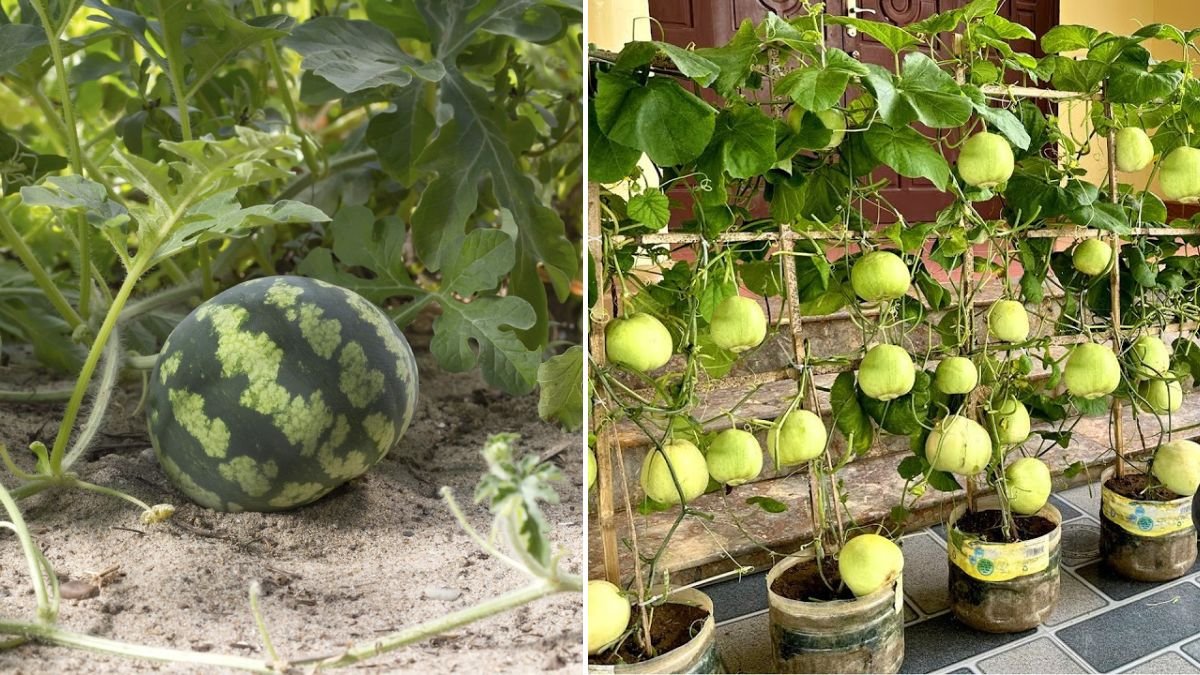
Background Context: Understanding Uneven Melon Production
Melons — including cantaloupes, honeydews, and watermelons — are highly rewarding plants to grow. Their lush vines and abundant leaves often make gardeners feel confident about their success. However, it’s a common phenomenon that one garden produces bountiful melons while another, seemingly identical, struggles to yield fruit.
The reasons for these differences lie in the unique biological needs of melons. Unlike some vegetables that self-pollinate, melon plants require specific conditions for flowers to develop into fruit. Factors such as pollination, sunlight exposure, soil fertility, watering practices, and environmental conditions all affect fruit production. Understanding these variables helps explain why some melon gardens thrive while others do not. (extension.okstate.edu)
1. Pollination: The Most Critical Factor
One of the biggest reasons for uneven melon production is ineffective pollination. Melons are monoecious, meaning they have separate male and female flowers on the same plant. Female flowers need pollen from male flowers to set fruit, and their window for fertilization is short.
✔ Gardens with abundant pollinators like bees or manual pollination tend to set fruit consistently.
✘ Gardens without sufficient pollinators may see many flowers but no fruit development.
Tips for Better Pollination:
- Plant pollinator-friendly flowers nearby, such as marigolds or basil, to attract bees.
- Hand-pollinate flowers with a small brush if natural pollination is insufficient. (allthatgrows.in)
By ensuring effective pollination, you significantly increase the likelihood of your melon plants producing fruit.
2. Sunlight and Warmth Are Essential
Melons are sun-loving plants that thrive in full sun and warm temperatures. Ideally, they require 8–10 hours of direct sunlight daily for optimal flowering and fruit set. Insufficient sunlight can slow vine growth, reduce flower production, and ultimately limit fruit formation. (completegardening.com)
If your garden receives more sunlight than a neighbor’s, your melons are more likely to flourish and set fruit consistently.
3. Soil Quality Makes a Difference
Melons grow best in well-draining, fertile soil with a slightly acidic to neutral pH of 6.0–7.0. Soil rich in organic matter encourages healthy root systems, nutrient absorption, and consistent fruiting.
Soil lacking nutrients or structure can lead to abundant foliage but little to no fruit. Incorporating compost or other organic matter can significantly improve soil health and increase yields. (gardenerbible.com)
Additionally, beneficial soil microorganisms, such as mycorrhizal fungi, help melons absorb nutrients more efficiently, further supporting fruit development.
4. Proper Nutrition: Balance Leaf Growth and Fruiting
Too much nitrogen can be a hidden culprit behind poor fruiting. While nitrogen promotes leafy vine growth, excessive nitrogen during flowering diverts energy away from fruit set.
For optimal results:
- Provide balanced fertilizer during early growth stages.
- Switch to a phosphorus- and potassium-rich fertilizer during flowering to support fruit formation. (yara.com.au)
This balance ensures your vines remain healthy while also prioritizing the production of melons.
5. Watering: Consistency is Key
Watering practices play a major role in melon production. Melons need regular, consistent watering, especially during flowering and fruit development.
- Too little water: Stresses plants, reduces flower production, and limits fruit growth.
- Too much water: Can lead to root rot or cause melons to split. (extension.okstate.edu)
Mulching around the base of vines helps maintain consistent soil moisture, prevents evaporation, and keeps roots healthy.
6. Spacing and Airflow Improve Yields
Melons are sprawling plants. Crowding leads to competition for sunlight, nutrients, and water, reducing both flower production and fruit quality.
- Adequate spacing allows vines to spread and improves sunlight penetration.
- Better airflow reduces the risk of disease and promotes pollinator access. (completegardening.com)
By providing enough room, your melon garden is more likely to produce larger and more abundant fruit.
7. Temperature and Environmental Factors
Melons prefer warm, stable conditions. Cool temperatures, excessive rainfall, or heat stress can negatively affect flower development and pollinator activity. Gardens exposed to the ideal range of temperature and humidity will see more consistent fruiting. (biologyinsights.com)
Planting melons in the right season and microclimate helps ensure that flowers set fruit effectively.
The Science of Consistent Melon Fruiting
Research indicates that combining balanced nutrition, proper watering, soil health, and pollination significantly enhances melon fruit yield. Biostimulants such as mycorrhizal fungi improve root efficiency, nutrient uptake, and stress tolerance, leading to more reliable and abundant fruit production. (mdpi.com)
This explains why seemingly small differences in care can lead to large differences in harvest results between gardeners.
Practical Tips to Boost Melon Fruit Production
🌞 Maximize Sunlight
Plant melons in the sunniest location available, rotate crops if necessary, and ensure adequate light for all vines.
🐝 Promote Pollination
Encourage bees with companion flowers or perform hand pollination to improve fruit set.
🌱 Improve Soil Quality
Amend soil with compost, test pH, and consider introducing beneficial microorganisms.
💧 Maintain Water Consistency
Water deeply and evenly, particularly during flowering and early fruit development.
🧪 Apply the Right Fertilizer
Switch to phosphorus- and potassium-rich fertilizers during flowering while moderating nitrogen.
📏 Ensure Proper Spacing
Space plants sufficiently to allow airflow, sunlight exposure, and room for runners to develop.
Recommended Authoritative Sources
For reliable information and expert gardening tips:
- Oklahoma State University – Melon Production Fact Sheet: Comprehensive guide for commercial and home growers. (extension.okstate.edu)
- Royal Horticultural Society – Grow Your Own Melons: Expert advice on growing melons at home. (rhs.org.uk)
- AllThatGrows – Common Problems Growing Melons: Practical troubleshooting for flower and fruit issues. (allthatgrows.in)
- Yara Australia – Increasing Melon Yield: Nutrient management for better fruit set. (yara.com.au)
These sources provide a mix of scientific research and practical advice to help gardeners achieve consistently high yields.
Final Thoughts
If you’ve wondered why your neighbor’s melon garden keeps producing fruit while yours doesn’t, the explanation usually comes down to pollination success, sunlight, soil health, proper nutrition, consistent watering, and environmental conditions.
By assessing and optimizing these factors, you can dramatically improve your garden’s fruit yield. With careful attention to detail and the right growing practices, melon plants can thrive, producing sweet, juicy fruits season after season.