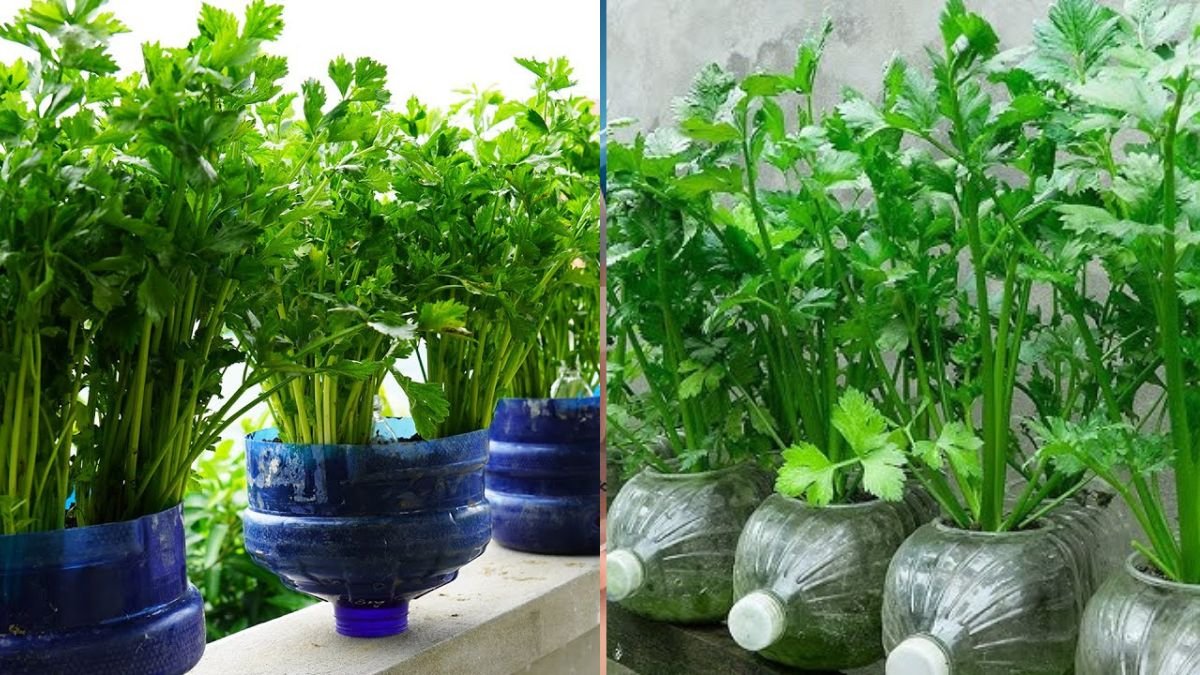
Why Celery Is Tricky to Grow
Celery is unique among vegetables because it contains about 95% water. This high water content means celery is extremely sensitive to moisture fluctuations. Inconsistent watering can lead to:
- Hollow or stringy stalks
- Bitter flavor
- Stunted growth
- Reduced yields
In container gardening or small spaces, soil can dry out quickly, leaving celery roots under stress. Studies show that steady, consistent moisture is essential for tender, full-bodied stalks. Without a proper irrigation method, even experienced gardeners can struggle to achieve optimal yields. (rhs.org.uk)
The plastic bottle hanging method solves this challenge by providing continuous, controlled watering directly to the roots, minimizing water stress and promoting healthy, productive growth.
How the Plastic Bottle Hanging Method Works
This innovative method involves using everyday plastic bottles to drip water gradually into the celery’s soil. Here’s why it works so well:
- Continuous moisture supply: Gravity-fed drip ensures roots are never dry.
- Reduced manual watering: No need to water multiple times daily.
- Improved growth consistency: Steady moisture supports thicker, juicier stalks.
- Low-cost and sustainable: Uses recycled bottles instead of expensive irrigation systems.
By maintaining optimal root hydration, this method mimics natural conditions and helps your celery reach its full growth potential, producing more stalks and increasing overall yield. (theseedcollection.com.au)
Materials Needed
To implement this system, you need:
- Empty plastic bottles (500 ml–2 L)
- Twine or string to hang bottles
- Sharp tool (nail, awl, or screwdriver) for creating holes
- Celery plants (in containers or garden soil)
Optional materials: Mulch (straw, leaves) and liquid fertilizer for optimal growth.
Step-by-Step Setup
Step 1: Prepare the Bottles
- Wash empty bottles thoroughly.
- Drill 1–3 small holes in the bottle cap or near the bottom to control drip rate.
- Fill each bottle with water.
The small holes allow water to slowly drip out, ensuring roots remain hydrated without flooding the soil.
Step 2: Hang the Bottles
- Use string or twine to suspend bottles upside down above your celery plants.
- Position bottles so water drips close to the plant base, directly reaching the root zone.
- Adjust height and hole size to control drip speed, ensuring even moisture distribution.
This setup acts as a simple micro-irrigation system, delivering water where it’s needed most and reducing evaporation. (youtube.com)
Step 3: Planting and Soil Preparation
- Use well-draining, nutrient-rich soil for celery. A mix of compost, garden soil, and perlite works best.
- In container setups, ensure adequate depth for root expansion (at least 12–15 inches).
- Mulch around the base to retain moisture and reduce soil temperature fluctuations. (theseedcollection.com.au)
Plant celery seedlings 6–8 inches apart to allow room for stalks to grow thick and strong.
Step 4: Monitor and Adjust
- Check soil moisture daily, especially during hot weather.
- Adjust drip rate by enlarging or reducing hole size if necessary.
- Ensure bottles do not empty too quickly — refill as needed.
The goal is steady soil moisture without overwatering, which prevents root rot and promotes healthy stalk development. (rhs.org.uk)
Additional Tips to Maximize Yield
Provide Adequate Sunlight
Celery thrives in 6–8 hours of direct sunlight per day. Morning sun is preferable, especially in hotter climates. (foodrevolution.org)
Fertilize Regularly
A balanced liquid fertilizer every 2–3 weeks encourages vigorous growth and helps stalks remain thick and juicy. (rhs.org.uk)
Regrow from Scraps
You can regrow celery from kitchen scraps:
- Save the base of a celery bunch after consumption.
- Place it in a shallow bowl with water covering the base.
- Roots and new stalks appear within a week.
- Transplant into soil once roots are established. (idealhome.co.uk)
This method allows you to produce more celery without buying new plants, doubling your potential yield when combined with bottle irrigation.
Mulching
Applying mulch around the base slows water evaporation, maintains soil temperature, and suppresses weeds. (theseedcollection.com.au)
Succession Planting
Plant new celery every few weeks to maintain a continuous harvest throughout the growing season. This ensures you always have fresh stalks ready for the kitchen. (spice.alibaba.com)
Harvesting Celery
Celery typically matures in 12–16 weeks, depending on variety and growing conditions. Signs of readiness include:
- Thick, firm stalks
- Healthy green color
- Stalks reaching the desired height
Harvest by cutting outer stalks for continuous production or by uprooting the entire plant for a single harvest. Proper harvesting ensures maximum yield and quality.
Why This Method Works
Celery’s shallow roots and high water demand make consistent moisture the most important factor for growth. The plastic bottle hanging method delivers water steadily and directly to the roots, minimizing stress and promoting robust stalk development. Combined with nutrient-rich soil, mulching, and proper sunlight, this method doubles yields without requiring expensive tools or irrigation systems. (rhs.org.uk)
Recommended Authoritative Sources
- Royal Horticultural Society: Expert advice on celery growth, watering, and soil care (rhs.org.uk)
- The Seed Collection: Tips for juicy celery growth and container gardening (theseedcollection.com.au)
- Ideal Home: Regrowing celery from scraps (idealhome.co.uk)
- AgriFarming: Container growing and moisture management for celery (agrifarming.in)
Conclusion
Growing celery successfully doesn’t have to be challenging or expensive. With a simple plastic bottle hanging drip system, you can maintain consistent root moisture, reduce manual watering, and maximize yield. Combined with proper soil, fertilization, sunlight, and regrowing scraps, this technique can double your celery harvest, even in small container setups or urban gardens.
This smart, low-cost, and sustainable solution is perfect for beginner gardeners, urban dwellers, or anyone looking to enjoy fresh, homegrown celery without complex irrigation systems. Start today — repurpose a plastic bottle, set up your drip system, and watch your celery thrive!