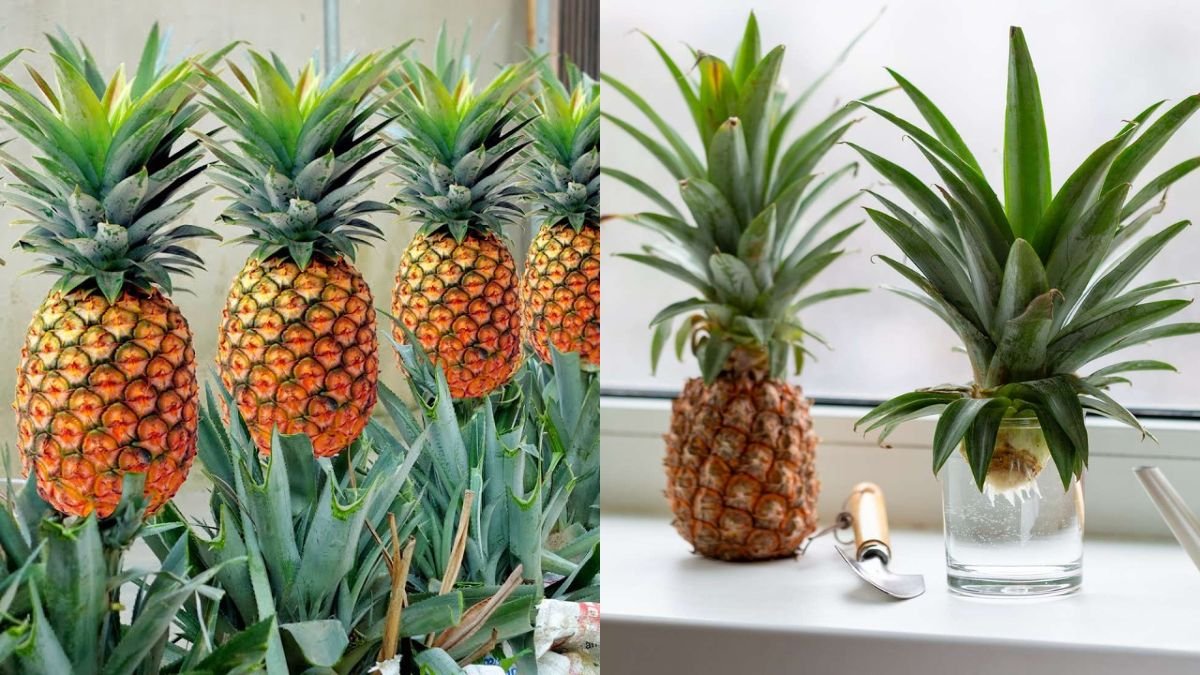
Why Grow Pineapple From the Top?
Growing pineapple from the crown is not only fun and educational but also cost-effective. Instead of buying seedlings, you can reuse a discarded pineapple top, saving money while learning propagation skills. Pineapple tops, when treated correctly, develop roots quickly and grow vigorously in warm, sunny environments.
Moreover, growing your own pineapple allows you to control soil, watering, and nutrients, producing healthier plants and eventually sweeter, homegrown fruit. This process turns what would be kitchen waste into a rewarding gardening project. (lodhigarden.com)
Understanding Pineapple Botany
Pineapples (Ananas comosus) belong to the bromeliad family. They are slow-growing tropical plants, but their crowns contain dormant root buds capable of sprouting in favorable conditions. Pineapples thrive in sunny, warm climates with well-draining soil. Proper propagation accelerates root and foliage growth, helping plants mature faster.
Because pineapples are tropical, indoor gardeners or those in cooler climates may need to simulate warmth and light for optimal growth. Understanding this biology is key to growing them successfully from discarded tops. (ucanr.edu)
Step 1: Select the Best Pineapple Top
The first step in successful propagation is choosing a healthy crown:
- Pick bright green leaves with no signs of browning or wilting.
- Ensure the base is firm, with small “root bud” dots visible.
- Avoid fruit showing rot or mold, as this will hinder growth.
For best results, twist the crown off rather than cutting it. This helps preserve the natural rooting tissue and sets the plant up for fast growth. (lodhigarden.com)
Step 2: Prepare the Crown
Preparation ensures the crown develops roots quickly without rotting:
- Remove 5–6 of the lower leaves to expose the stem.
- Let the crown dry in a shaded spot for 2–3 days to form a callus.
- Remove any remaining fruit flesh to prevent decay.
This step is crucial for faster rooting and overall plant survival. (lodhigarden.com)
Step 3: Rooting the Crown in Water
Rooting the crown in water allows visual monitoring and often accelerates early growth:
- Place the crown in a jar with only the stem submerged.
- Change water every 2–3 days to prevent bacterial growth.
- Position near bright, indirect sunlight.
Fine white roots should emerge in 7–10 days, indicating the plant is ready for soil. Rooting in water frequently results in faster, more vigorous growth compared to planting directly into soil. (lodhigarden.com)
Step 4: Select the Right Soil
Once roots develop, or if planting directly, provide a well-draining soil mix:
- 1 part garden soil or loam
- 1 part perlite or coarse sand
- 1 part organic compost or coconut coir
Pineapples dislike soggy soil, so loose, nutrient-rich soil ensures proper drainage and root development. Containers with drainage holes also accelerate growth by warming the soil faster and preventing waterlogging. (lodhigarden.com)
Step 5: Provide Sunlight and Warmth
Pineapples are sun-loving tropical plants. To maximize growth:
- Ensure 6–8 hours of direct sunlight daily.
- Maintain temperatures between 21°C–35°C (70°F–95°F).
- Avoid prolonged exposure to temperatures below 16°C (60°F).
If natural sunlight is insufficient, consider grow lights or placing plants near bright windows. Sunlight fuels leaf growth, which drives root development and overall vigor. (lodhigarden.com)
Step 6: Water Wisely
While pineapples need moisture, overwatering can cause root rot. Best practices include:
- Keep soil slightly moist, not wet.
- Water lightly once or twice per week in warm weather.
- Pour water into the central cup formed by leaves.
- Mist leaves occasionally to maintain humidity.
This balanced approach encourages healthy roots and accelerates leaf and stem development. (lodhigarden.com)
Step 7: Feed for Rapid Growth
Nutrients accelerate development:
- Use a balanced liquid fertilizer (10-10-10) every 2–3 weeks.
- Apply compost tea or organic seaweed extract for extra vigor.
- Foliar feeding (spraying diluted fertilizer on leaves) enhances nutrient absorption.
Pineapples absorb nutrients through leaves as well as roots, so proper feeding promotes faster growth and stronger plants. (lodhigarden.com)
Step 8: Optional — Boost Early Flowering
Pineapples usually take 18–36 months to flower. To accelerate:
- Place a ripe apple next to the plant and cover with a clear bag for 5–7 days. Ethylene gas triggers flowering.
- Some growers use calcium carbide and water to produce acetylene gas for early bloom.
After flowering begins, switch to potassium-rich fertilizer to encourage fruit development. (lodhigarden.com)
Step 9: Ongoing Care
Once established:
- Rotate the pot weekly for even sunlight exposure.
- Remove dead or damaged leaves.
- Protect from frost or drafts.
Avoid common mistakes:
- Heavy clay soil that holds water
- Planting without drying the base (causes rot)
- Forgetting to fertilize (slows growth)
Proper care ensures your pineapple develops rapidly and healthily. (lodhigarden.com)
Authoritative Sources
- Lodhi Garden – Pineapple Propagation Tips (lodhigarden.com)
- Times of India – Balcony Pineapple Growing (timesofindia.indiatimes.com)
- Gardenguides – Pineapple Tops Guide (gardenguides.com)
- UCANR Cooperative Extension – Pineapple Propagation (ucanr.edu)
Conclusion: From Discarded Tops to Thriving Pineapple Plants
With patience and the right techniques, discarded pineapple tops can become thriving, tropical plants. By selecting healthy crowns, preparing them properly, rooting in water, providing optimal sunlight, watering wisely, and fertilizing regularly, beginners can grow pineapple plants faster and healthier.
Next time you enjoy a pineapple, don’t throw away the top — it’s your first step toward a lush tropical garden and potentially homegrown fruit. With consistent care and attention, this “kitchen scrap” becomes a crown jewel of your garden that can’t be ignored!