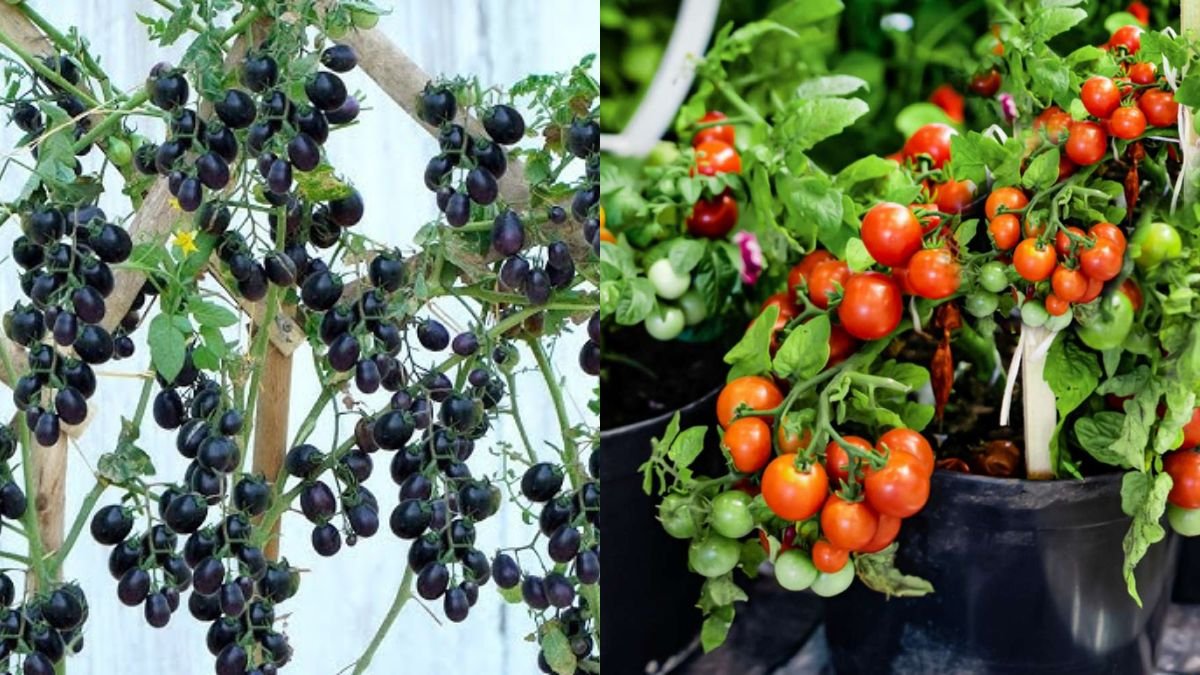
Why Black and Grape Tomatoes Are Garden Favorites
Black Tomatoes
Black tomatoes are prized for their intense flavor, rich color, and high nutrient content. The dark hue comes from anthocyanins, antioxidants that give the fruits their deep color. Popular black tomato varieties include:
- Black Krim – Heirloom variety with a rich, smoky-sweet taste.
- Black Cherry – Small, flavorful fruits ideal for snacking.
- Indigo Rose – Hybrid with dark skin and bright red interior, rich in antioxidants.
- Black Beauty – Known for large fruits and strong flavor, suited to warm climates.
Grape Tomatoes
Grape tomatoes are small, prolific, and easy to grow. They produce clusters of 30–40 small fruits per plant, making them ideal for gardeners who want high yields in limited space. Their natural sweetness and compact size make them perfect for containers or small garden beds.
Both types are easy to grow, suitable for beginner gardeners, and provide a steady harvest throughout the season, making them excellent choices for home gardening enthusiasts.
🌞 Choosing the Right Growing Location
Tomatoes thrive in full sunlight. Both black and grape tomato varieties require 6–8 hours of direct sunlight per day for optimal growth and fruit production. Adequate sunlight ensures vigorous vine development and enhances the natural sweetness of the fruit.
When selecting a planting spot:
- Choose the sunniest location available in your garden, patio, or balcony.
- Avoid areas with excessive shade or strong winds that could damage delicate vines.
- Use reflective mulch or light-colored surfaces around the plants to increase sunlight exposure, especially in cooler climates.
🪴 Soil Preparation and Container Growing
Tomatoes need fertile, well-drained soil to grow well. The ideal soil type is sandy or loamy with a slightly acidic to neutral pH of 6.5–7.0. For container growers:
- Use pots 35 cm (14 inches) deep or larger for indeterminate black tomato varieties.
- Grape tomatoes can thrive in medium-sized pots or grow bags.
- Mix compost or aged manure into the soil before planting to provide essential nutrients.
- Add perlite or coarse sand to improve drainage and prevent waterlogging.
Raised beds and containers also help control soil temperature, retain moisture, and reduce pest problems, ensuring consistent, high-quality fruit production.
🌱 Starting Seeds and Transplanting
For the best results:
- Start seeds 6–8 weeks before the last frost date indoors.
- Sow seeds 0.5–1 inch deep in seed-starting mix.
- Keep soil moist and maintain temperatures between 70–75°F (21–24°C) for optimal germination.
- Once seedlings develop two to three true leaves, gradually harden them off by exposing them to outdoor conditions for a few hours each day.
Transplant seedlings outdoors when the risk of frost has passed and soil temperatures reach 65–70°F (18–21°C). Plant each seedling 18–24 inches apart to allow adequate airflow and space for vine growth.
💧 Watering and Fertilization
Tomatoes need consistent moisture to develop juicy, sweet fruits. Overwatering can cause root rot or fruit cracking, while underwatering can lead to blossom-end rot.
Watering Tips:
- Water deeply at the base of the plant, keeping soil evenly moist.
- Avoid wetting the leaves to prevent fungal diseases.
- Use mulch to retain soil moisture and regulate temperature.
Fertilization Tips:
- Apply a balanced fertilizer (10–10–10) during early growth to encourage strong vine development.
- Switch to phosphorus- and potassium-rich fertilizer once flowers appear to promote fruit formation and sweetness.
- Organic alternatives like compost tea or fish emulsion every 2–3 weeks provide nutrients without synthetic chemicals.
Proper feeding ensures strong plants and abundant fruit production throughout the growing season.
🌿 Supporting and Pruning Tomato Plants
Both black and grape tomatoes benefit from structural support. Indeterminate black varieties produce long vines that need stakes, cages, or trellises, while grape tomatoes can also be supported in containers or vertical systems.
Pruning Tips:
- Remove weak or damaged side shoots (suckers) to direct energy toward fruit production.
- Limit each plant to 2–3 main stems for larger and sweeter fruit.
- Ensure good spacing between vines to improve air circulation and reduce disease risk.
Pruning and support not only improve yield but also make harvesting easier and keep fruits clean and healthy.
🐝 Pollination for Maximum Fruit Set
Tomatoes have both male and female flowers, and pollinators are crucial for proper fruit set. Bees, butterflies, and even manual pollination using a small brush can ensure flowers are pollinated, resulting in more fruits per plant.
For urban gardeners or areas with few natural pollinators:
- Plant pollinator-friendly flowers like marigolds nearby.
- Hand-pollinate flowers to improve fruit set and consistency.
Consistent pollination directly impacts the number, size, and quality of tomatoes harvested.
🍅 Pest and Disease Management
Common pests include aphids, hornworms, and spider mites, while common diseases are powdery mildew, blight, and fusarium wilt.
Prevention and Control:
- Inspect plants regularly and remove pests manually when possible.
- Use organic sprays such as neem oil or insecticidal soap for infestations.
- Rotate crops each season to reduce soil-borne diseases.
- Keep foliage dry and allow proper spacing to improve airflow and reduce fungal risks.
Maintaining plant health ensures continuous fruit production and prevents losses.
🍅 Harvesting Tips
Knowing when to harvest is essential for the best flavor and juiciness.
Black Tomatoes:
- Look for uniform dark color with a slight softness to the touch.
- Avoid harvesting too early, as underripe fruits are less flavorful.
Grape Tomatoes:
- Ready when fully colored and easily detaches from the stem.
- Allow fruits to ripen on the vine for maximum sweetness.
Most black and grape varieties mature 70–85 days after transplanting, depending on climate and care.
🍴 Enjoying Homegrown Black and Grape Tomatoes
Homegrown black and grape tomatoes are incredibly versatile:
- Fresh salads: Add sweetness and color to mixed greens.
- Roasting: Concentrates flavor for sauces and pasta dishes.
- Snacking: Bite-sized grape tomatoes make a healthy, sweet snack.
- Salsa and bruschetta: Perfect for fresh, gourmet flavor.
Their rich taste and vibrant color also make them a standout on any dining table.
🌟 Tips for Maximum Yield
- Provide full sun for strong growth and sugar development.
- Maintain consistent moisture with proper mulching.
- Fertilize regularly to support flowers and fruiting.
- Support vines with cages or trellises for clean fruit.
- Prune weak shoots to focus energy on fruit.
- Ensure effective pollination for full fruit sets.
By following these tips, gardeners can enjoy heavy harvests of both black and grape tomatoes.
📚 Suggested Authoritative Sources
- TomatoAbout – Black Tomato Varieties & Growing Tips (tomatoabout.com)
- Crop Cove – Growing Black Tomatoes (cropcove.com)
- Meadowlark Journal – Easy Tomato Growing Tips (meadowlarkjournal.com)
- AgriFarming – Container Tomato Growing (agrifarming.in)
- Organic India Seeds – Black Tomato Growing Guide (organicindiaseeds.com)
🌟 Final Thoughts
Growing black and grape tomatoes at home is rewarding and enjoyable. With proper sunlight, soil, watering, fertilization, pruning, and pollination, even beginner gardeners can achieve bountiful harvests of flavorful, juicy tomatoes. These varieties are perfect for small spaces, containers, or traditional garden beds, offering high yields with minimal effort.
Their vibrant colors, rich flavors, and versatility in the kitchen make them a must-have for any home gardener. By following these tips, you can enjoy fresh, delicious tomatoes from your own garden throughout the growing season.