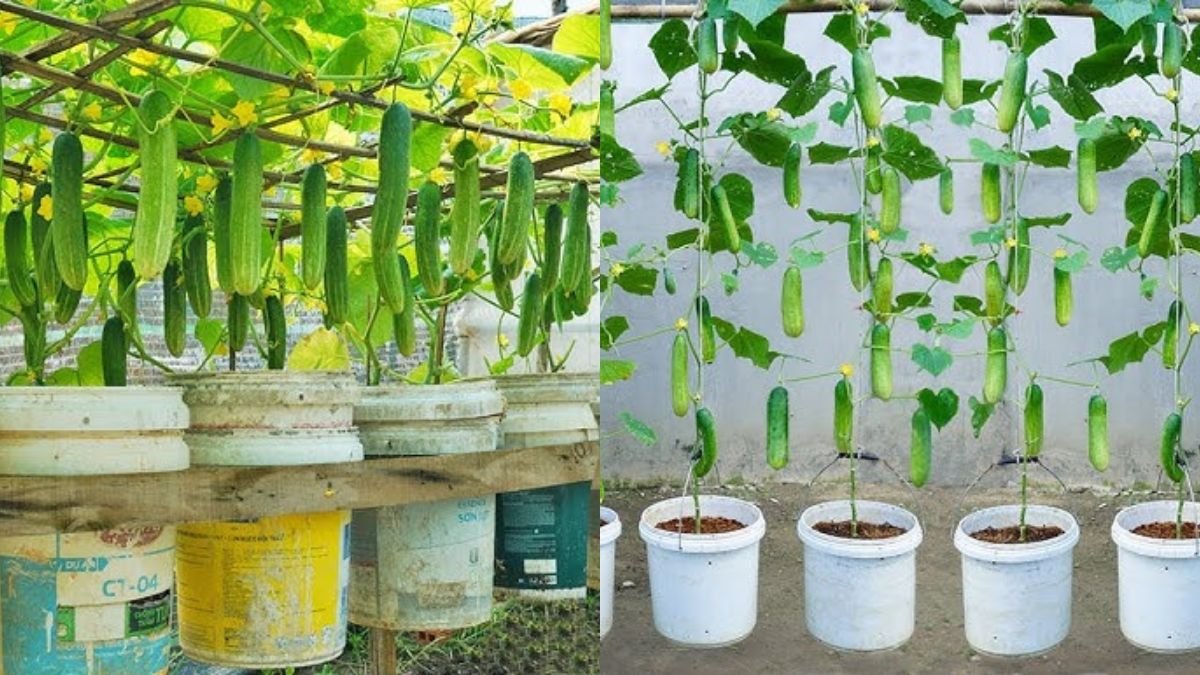
Cucumbers are crisp, refreshing, and highly rewarding to grow. Many people think growing cucumbers requires a large garden, but the truth is you can grow them in a hanging garden, on a balcony, or in a sunny window. By using smart space-saving techniques and starting from seeds, even beginners can enjoy a bountiful cucumber harvest.
Hanging gardens not only save space but also keep the plants off the ground, reducing pests and making harvesting easier. This guide explains step by step how to grow cucumbers from seeds in a hanging garden and maximize your yield. (Gardener Guidebook)
Why Choose Hanging Gardens for Cucumbers
Hanging gardens are an increasingly popular solution for urban gardeners or anyone with limited space. The benefits include:
- Saving floor space and making the garden aesthetically appealing
- Keeping cucumber vines elevated to prevent rot and pest damage
- Improving air circulation and sunlight exposure for healthier plants
- Making harvesting convenient as cucumbers dangle at eye level
This method allows cucumbers to thrive even without a traditional garden plot, making it perfect for beginners and small-space growers. (Gardener Guidebook)
Choosing the Right Cucumber Variety
Not all cucumber varieties are suitable for hanging gardens. Compact, bush, or patio varieties work best because they stay manageable and produce abundant fruit in containers. Recommended options include:
- Bush Champion: Compact and prolific
- Patio Snacker: Ideal for containers and small spaces
- Spacemaster 80: Perfect for confined areas
These varieties grow well in hanging baskets and allow beginners to enjoy plentiful cucumbers without overcrowding. (Gardener Guidebook)
Step 1: Prepare Your Seeds
Start your cucumber seeds by pre-soaking them in warm water for a few hours. This softens the seed coat and accelerates germination. Soaked seeds typically sprout within 3–10 days if kept warm and moist. (TDI Mall)
Step 2: Choose and Prepare a Hanging Container
Select a hanging basket at least 10–12 inches in diameter with drainage holes. Fill it with rich, well-draining potting mix combined with compost or perlite to retain moisture and provide nutrients. Proper soil preparation is essential for vigorous seedling growth and high yields. (Gardener Guidebook)
Step 3: Plant the Seeds
- Plant seeds about 1 inch deep in the potting mix
- Space seeds 6–8 inches apart to allow airflow and prevent overcrowding
- Water gently to settle the soil without washing away the seeds
Once planted, keep the soil evenly moist and ensure the basket is in a warm, sunny spot to encourage germination. (Gardener Guidebook)
Sunlight and Watering Requirements
Cucumbers require 6–8 hours of direct sunlight daily for optimal growth. Place your hanging garden where it receives ample light, such as a balcony, patio, or south-facing window.
For watering:
- Keep soil consistently moist but avoid waterlogging
- Hanging baskets dry out faster than ground beds, so check moisture frequently
- Mulch lightly to retain moisture and regulate temperature
Proper sunlight and consistent watering are key for healthy vines and abundant fruit. (Gardener Guidebook)
Step 4: Fertilizing Your Cucumbers
Feed cucumber plants every two weeks using:
- Balanced liquid fertilizer (10-10-10)
- Organic compost tea
Regular feeding supports rapid growth, strong vines, and more flowers, which leads to higher cucumber yields. (Trucos Hogar Jardin)
Step 5: Supporting the Vines
Cucumber vines naturally climb, so supporting them is essential in hanging gardens. Options include:
- A mini trellis inside the basket
- String or netting secured from the hanging hook
- Small bamboo stakes with mesh netting
Training vines upwards improves airflow, prevents disease, and makes harvesting easier. Guide vines gently as they grow to maximize productivity. (Gardener Guidebook)
Step 6: Maintenance and Pruning
- Remove yellow or damaged leaves to focus energy on healthy growth
- Trim overly long vines to encourage fruit production
- Maintain good air circulation to prevent fungal issues
Routine maintenance helps cucumbers remain vigorous, productive, and disease-free. (Gardener Guidebook)
Step 7: Harvesting Your Cucumbers
Cucumbers are usually ready for harvest 50–70 days after sowing. Look for firm, uniformly green fruits. Use garden scissors or pruners to harvest without damaging the vine. Frequent harvesting encourages the plant to produce more cucumbers throughout the season. (The Spruce)
Tips for Maximum Success
- Warm Soil: Keep soil temperatures around 70°F (21°C) for best germination (Real Simple)
- Pollination: Hand-pollinate flowers indoors using a small brush if pollinators are scarce
- Avoid Overcrowding: Thin seedlings to ensure each plant has space to grow and fruit
Following these tips ensures your hanging cucumbers are healthy, productive, and flavorful.
Authoritative Sources
- Gardener Guidebook — Hanging Cucumber Garden
- TDI Mall — Growing Cucumbers at Home
- University of Minnesota Extension — Cucumbers
- Times of India Gardening Tips
- The Spruce — When to Plant Cucumbers
These references provide credible, up-to-date guidance for beginners and small-space gardeners.
Conclusion — Enjoy Fresh Cucumbers All Season
Growing cucumbers in a hanging garden from seeds is simple, space-saving, and highly rewarding. By choosing the right variety, using containers, providing sunlight, watering consistently, and training vines upward, even beginners can enjoy abundant cucumber harvests.
Hanging gardens transform small spaces into productive, visually appealing vegetable patches, allowing you to enjoy fresh, crunchy cucumbers right at home. Start today, and watch your hanging garden flourish from seed to harvest!